A website for your HVAC company
Most HVAC customers arrive in a hurry, on a phone, with a system that has already failed. That single fact should shape the entire site — and it's the thing generic templates get wrong most often.
What an HVAC company’s website actually needs
Five things, in the order they matter. The first one is most of the job.
A phone number that is impossible to miss
When someone's air conditioning dies in July, they are not reading your About page. The fastest route to calling you should be visible the moment the page loads, and it should stay reachable as they scroll on mobile.
Your service area, stated plainly
Half of the people who land on an HVAC site are trying to answer one question: do you even come out here? Naming the towns and neighbourhoods you cover removes that doubt immediately — and it's also what local search needs in order to show you to the right people.
Proof you're licensed and insured
You're asking a stranger to let a technician into their home. Licence numbers, insurance, and how long you've been operating do more work on an HVAC site than any amount of design polish.
Emergency vs. scheduled work, separated
A broken furnace at 11pm and a routine spring service are two different customers with two different levels of urgency. A site that funnels them the same way frustrates both.
A quote request that takes under a minute
Long forms lose emergency customers. Ask for the minimum you need to call them back — and make sure it works properly on a phone, because that's where nearly all of this traffic comes from.
None of that is a to-do list for you.
Four of your team are working today. Each one owns a stage, and each stage happens for your HVAC company specifically — not for a category you picked off a menu.

Atlas
Asks what your HVAC company actually does — what you specialise in, who calls you, and what you want more of.

Orion
Turns that into a plan you read before anything is built — including which of the five above your page leads with.

Forge
Builds the whole site: the pages, the words, the imagery and the way people get in touch. You can watch or close the tab.

Compass
Puts it live on your own domain, and wires up booking and payments when you’re ready to take money through it.


Echo markets and Ledger counts. Neither has shipped, so neither is on your team yet — we would rather show you the empty chairs.
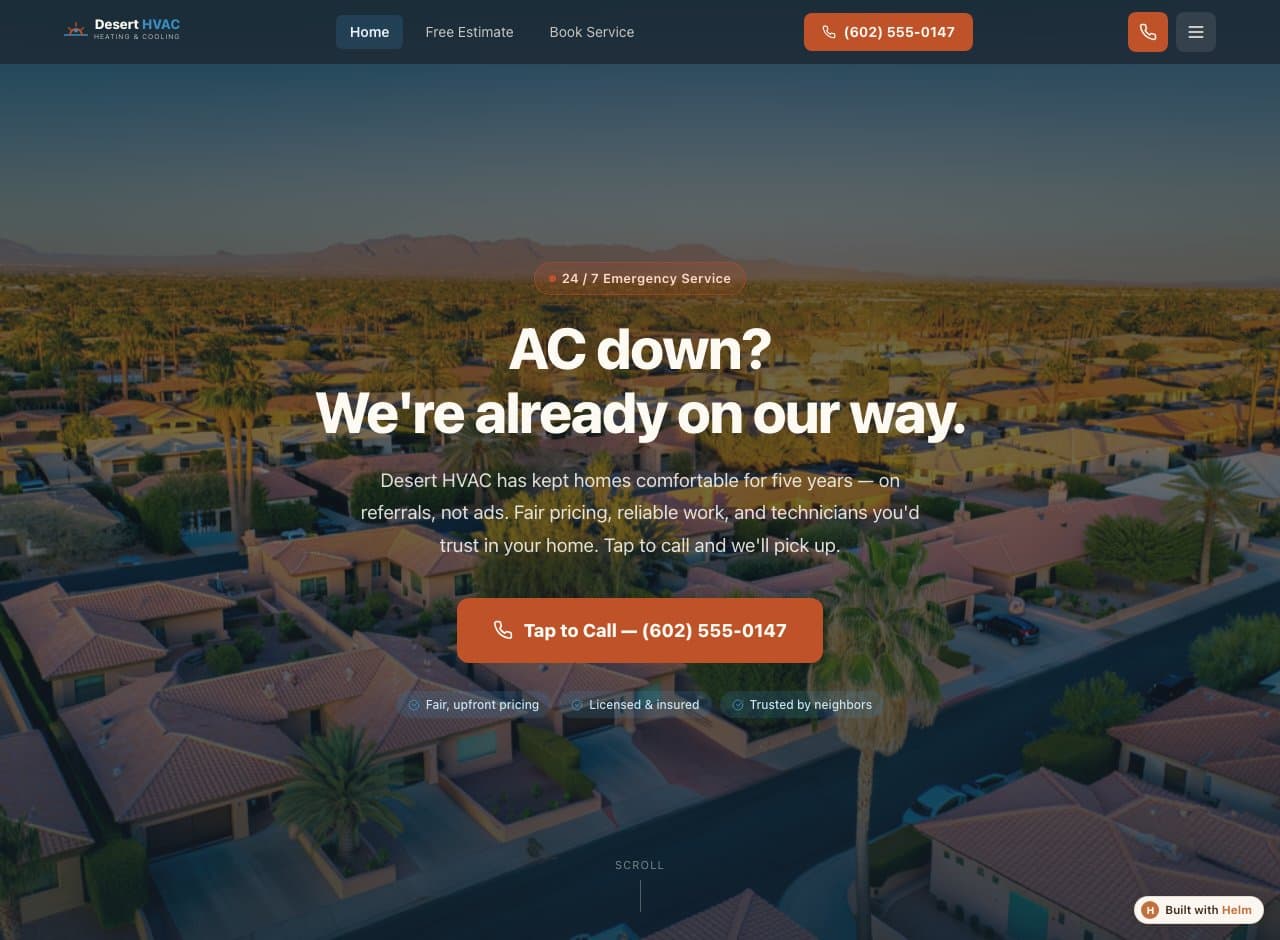
Here is one we built.
Desert HVAC is a real, published Helm build for an HVAC company — same conversation, same builder. Nothing on it was assembled by hand.
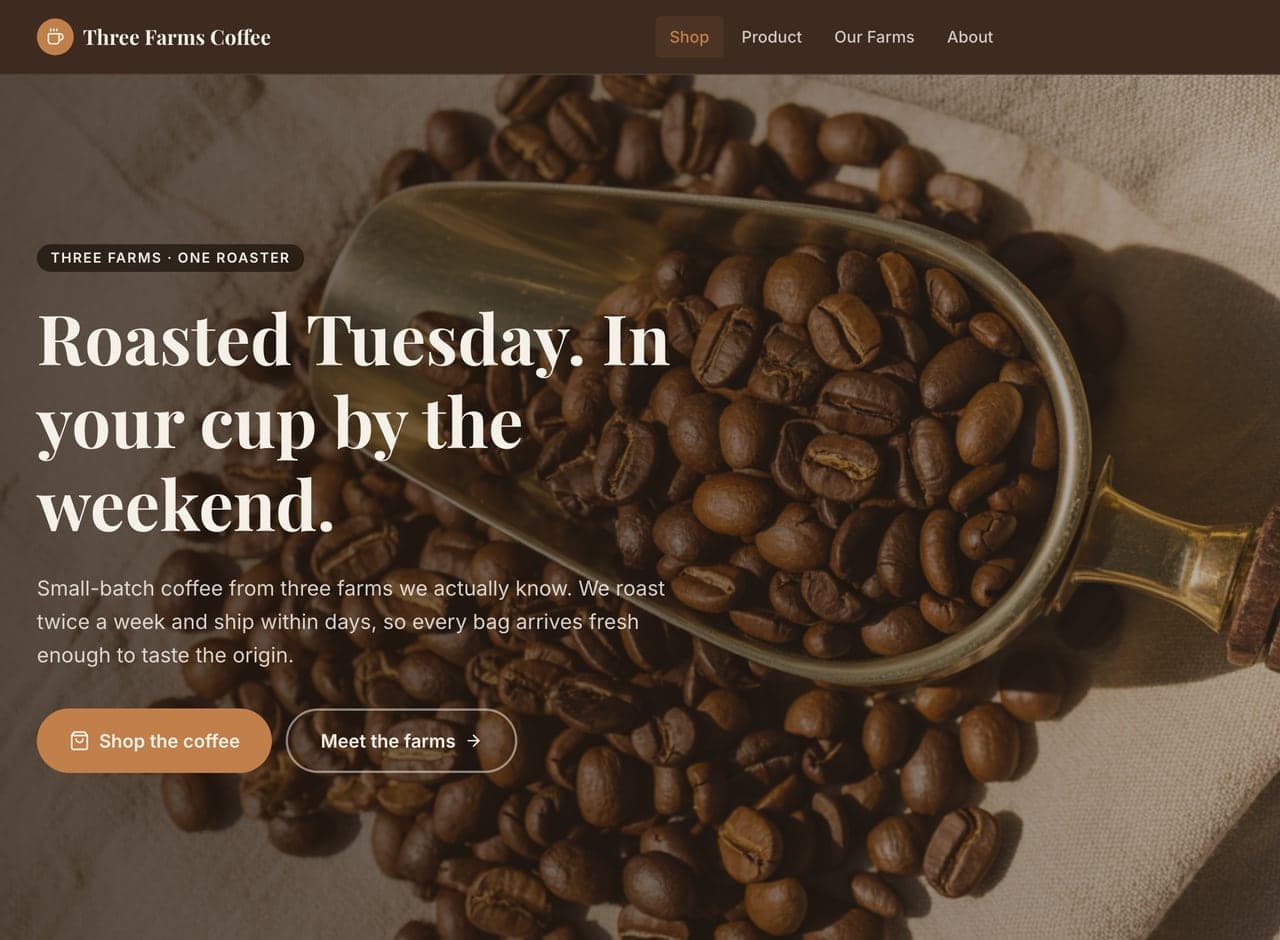
And three more, in other trades. One of them has a guide of its own if you want to see how the advice changed for a different business.


Common questions
How long does it take to get an HVAC website live?
You describe the business in a short conversation, review the plan Helm proposes, and it builds and publishes the site. It's a single sitting rather than a project that drags across weeks.
Can I show maintenance plans as well as one-off repairs?
Yes. Recurring maintenance agreements are the steadiest part of most HVAC businesses, so it's worth telling Helm about them in the conversation — they'll get their own place on the site rather than being buried in a services list.
Can customers book or request a quote through the site?
Yes — a quote or contact flow is part of the build, and Helm can wire up scheduling and payments when you're ready to go live.
Tell Helm about your HVAC company.
A few minutes of conversation, then a plan you read and approve before anything gets built.
Start a planFree to start — you see exactly what Helm produces for your HVAC company before you decide anything.