A website for your cleaning business
The difference between a cleaning business that works and one that doesn't is usually the ratio of recurring clients to one-off jobs. Most cleaning websites are built to sell a single clean, which is the harder sale and the worse customer.
What a cleaning business’s website actually needs
Five things, in the order they matter. The first one is most of the job.
Make the recurring option the obvious one
Weekly and fortnightly work is where the margin and the sanity are. If the site leads with one-off deep cleans and mentions regular service somewhere further down, it is actively selling the wrong thing to every visitor.
Publish what's included — and what isn't
Inside the oven, inside the windows, the fridge, laundry, skirting boards. Almost every complaint in this industry starts with an assumption about one of those. A plain checklist on the page prevents the argument and quietly filters out the customers who were going to be difficult.
Answer 'who is coming into my home?'
Whether cleaners are employed or subcontracted, whether they're background-checked, whether it's the same person every visit, and what your insurance covers if something gets broken. For residential work this is the deciding factor, not the price.
Price on something the customer can actually count
People know how many bedrooms and bathrooms they have. Most have no idea of their square footage. Asking for the number they can answer without getting up gets you a completed enquiry instead of an abandoned form.
Commercial work is a completely different sale
An office manager needs out-of-hours access, a contract, monthly invoicing and someone to call. Making them read a page written for a family home tells them you don't really do commercial, whether or not that's true.
None of that is a to-do list for you.
Four of your team are working today. Each one owns a stage, and each stage happens for your cleaning business specifically — not for a category you picked off a menu.

Atlas
Asks what your cleaning business actually does — what you specialise in, who calls you, and what you want more of.

Orion
Turns that into a plan you read before anything is built — including which of the five above your page leads with.

Forge
Builds the whole site: the pages, the words, the imagery and the way people get in touch. You can watch or close the tab.

Compass
Puts it live on your own domain, and wires up booking and payments when you’re ready to take money through it.


Echo markets and Ledger counts. Neither has shipped, so neither is on your team yet — we would rather show you the empty chairs.
We haven’t built a cleaning business yet.
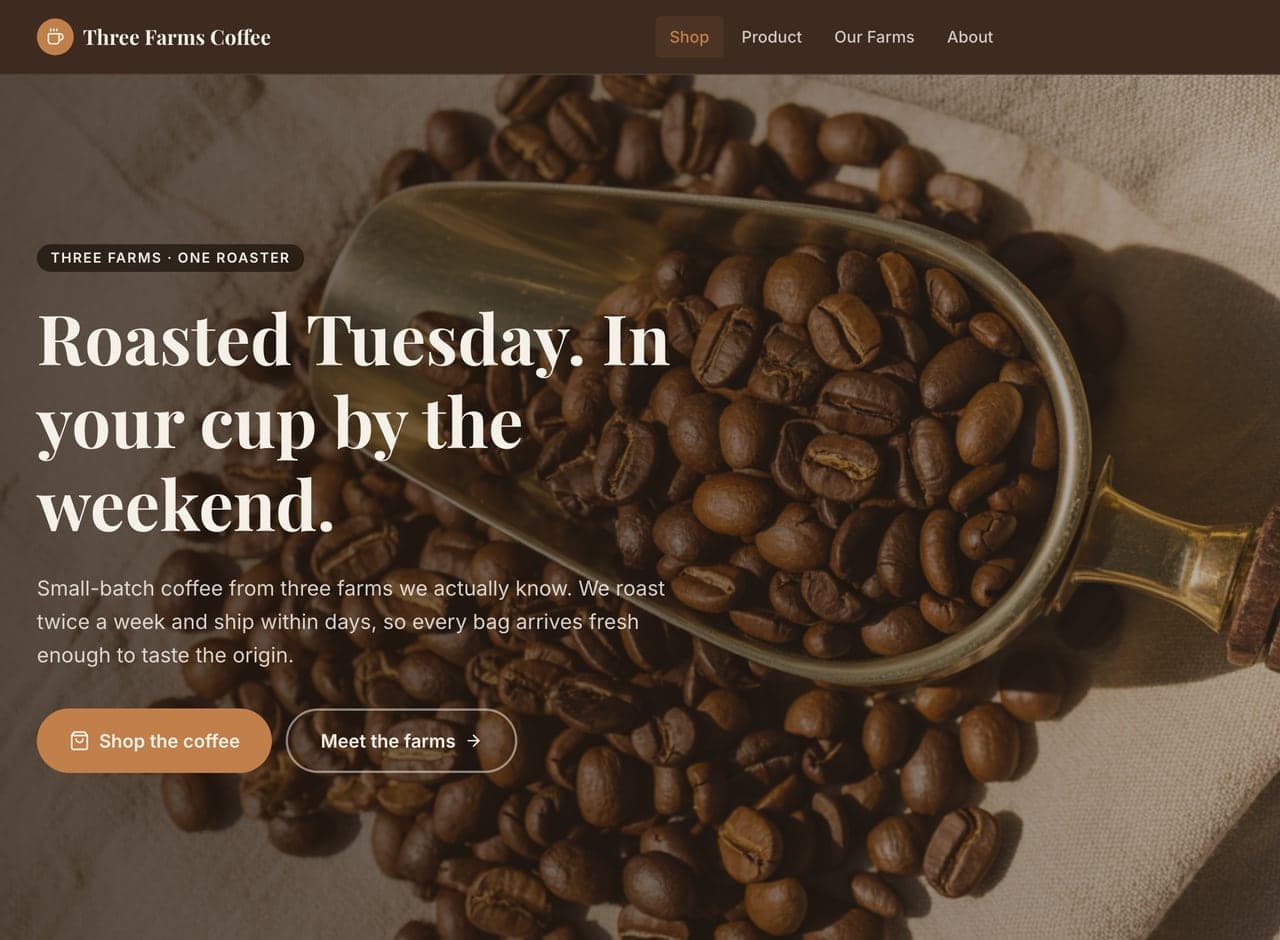
So we’re not going to show you one. These are three real, published Helm builds in other trades — same conversation, same builder. Two of them have a guide of their own if you want to see how the advice changed for a different business.


Common questions
Can customers set up a recurring booking and pay online?
Yes. Booking and Stripe payments can both be wired up when you go live, which is what makes a standing weekly arrangement practical to run.
Can I show different pricing for residential and commercial?
Yes. Tell Helm you serve both during the conversation and the plan gives each its own path, rather than forcing one page to speak to both.
What if I want to change my inclusions list later?
Click into it on the page and edit it. This list changes as your business does, so it's meant to be something you maintain yourself rather than something you have to request.
Tell Helm about your cleaning business.
A few minutes of conversation, then a plan you read and approve before anything gets built.
Start a planFree to start — you see exactly what Helm produces for your cleaning business before you decide anything.