A website for your plumbing business
Plumbing has two entirely separate customers: the person watching water spread across a kitchen floor, and the person calmly getting three quotes for a bathroom. Almost every plumbing website is built for the second and loses the first.
What a plumbing business’s website actually needs
Five things, in the order they matter. The first one is most of the job.
Be useful in the first ten seconds
Someone with an active leak needs your number immediately — and a single line telling them where to find their stop tap or shutoff valve. Being genuinely helpful before they've paid you anything is the strongest first impression a plumber can make, and almost nobody does it.
Say what a call-out costs before they have to ask
The reputational problem in this trade is the surprise invoice. Publishing your call-out fee, and whether it comes off the job if they go ahead, removes the single biggest hesitation someone has before dialling an unfamiliar number.
Two doors: emergency and estimate
A burst pipe at midnight and a bathroom refit are different conversations, different urgency and often different pricing. Give each its own obvious path instead of pushing both through one contact form.
Show the full range of work you take
Plenty of people assume a plumber only does blockages and leaks. If you fit water heaters, run gas lines, do repipes, or handle bathroom installations, saying so out loud wins jobs you're currently invisible for.
Name who will actually turn up
Subcontracting is common enough that people worry about it. Saying that your own named engineers do the work — and putting your licence and insurance next to that — answers a question customers rarely ask out loud but almost always have.
None of that is a to-do list for you.
Four of your team are working today. Each one owns a stage, and each stage happens for your plumbing business specifically — not for a category you picked off a menu.

Atlas
Asks what your plumbing business actually does — what you specialise in, who calls you, and what you want more of.

Orion
Turns that into a plan you read before anything is built — including which of the five above your page leads with.

Forge
Builds the whole site: the pages, the words, the imagery and the way people get in touch. You can watch or close the tab.

Compass
Puts it live on your own domain, and wires up booking and payments when you’re ready to take money through it.


Echo markets and Ledger counts. Neither has shipped, so neither is on your team yet — we would rather show you the empty chairs.
We haven’t built a plumbing business yet.
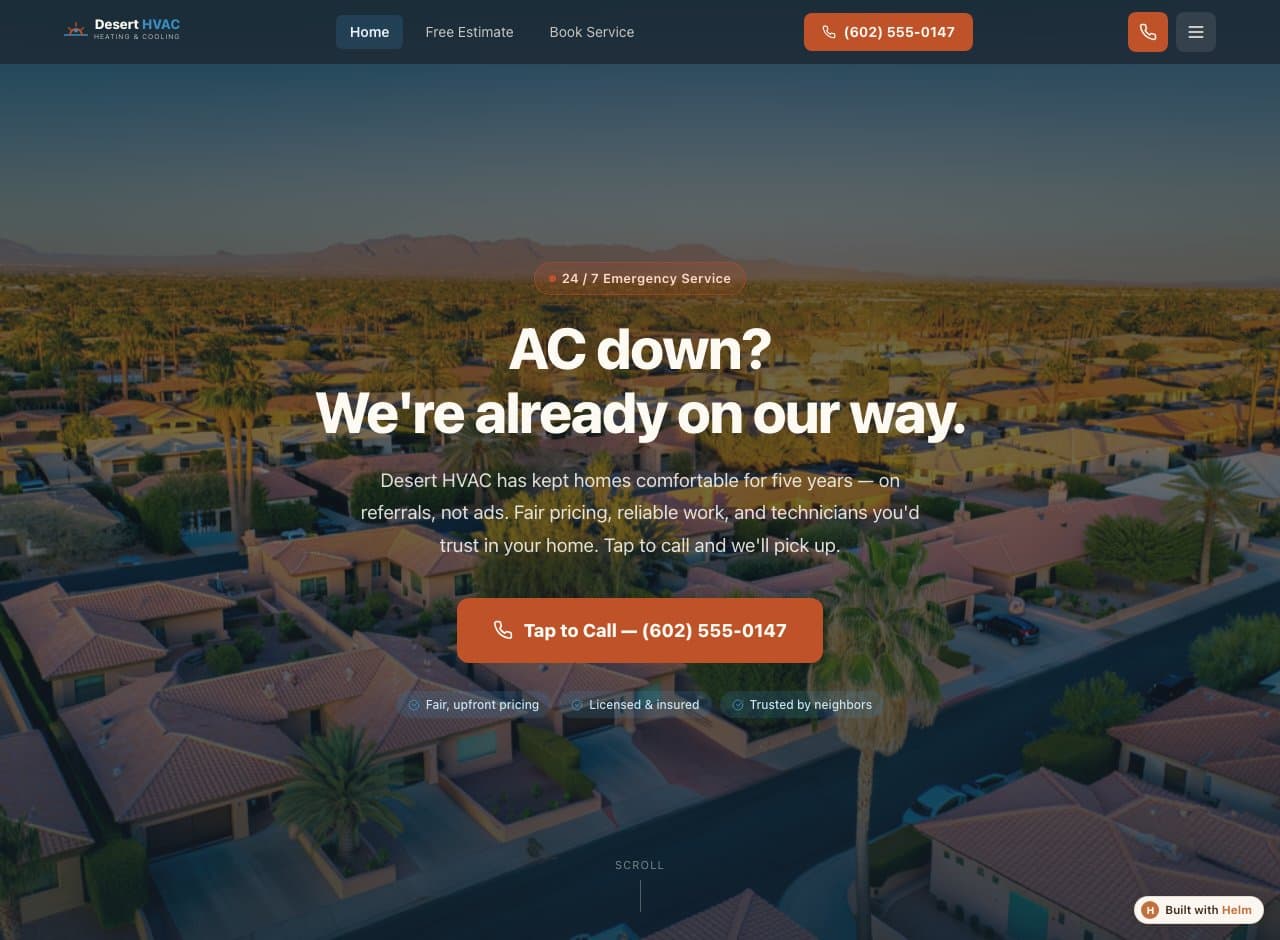
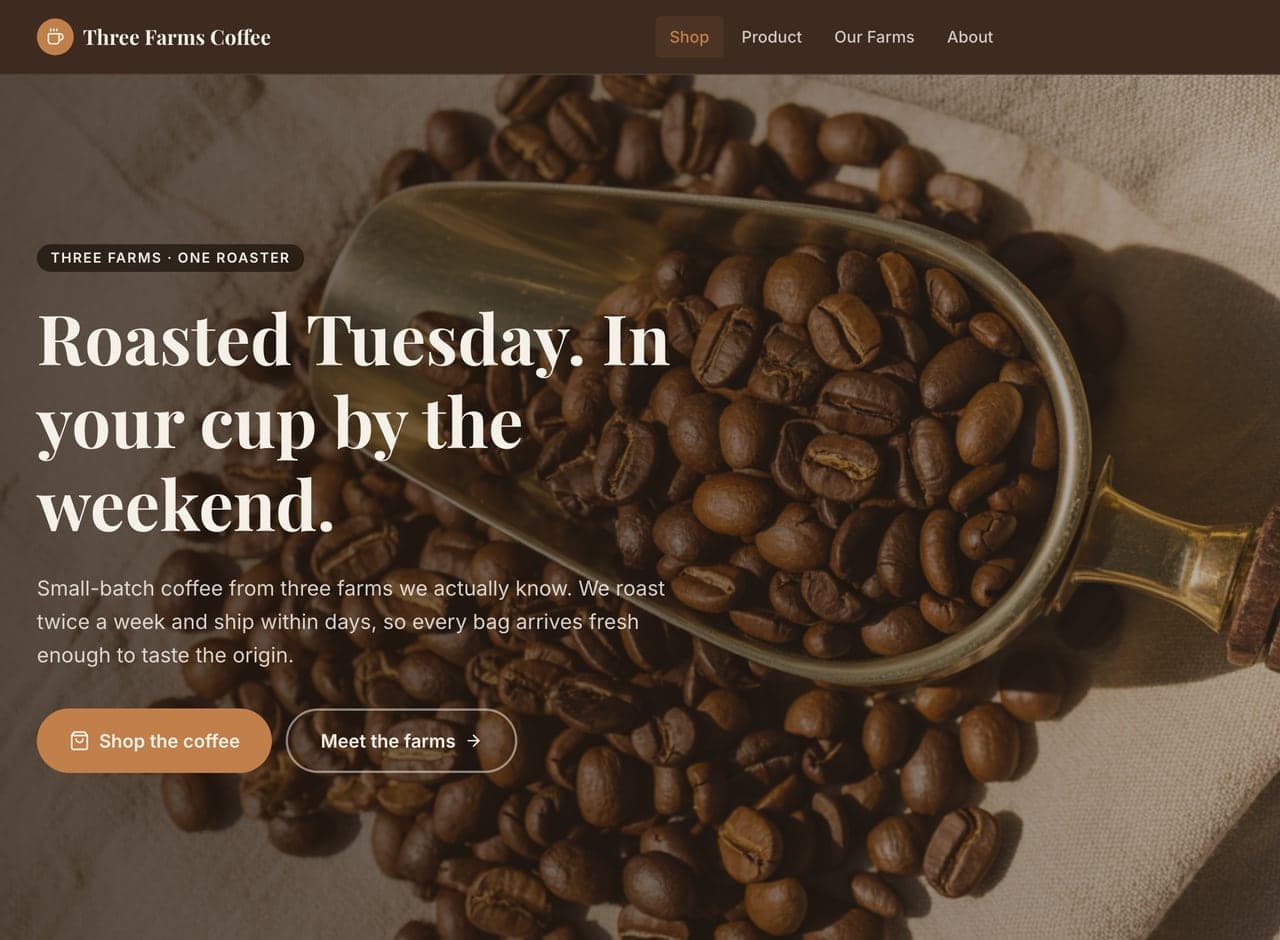
So we’re not going to show you one. These are three real, published Helm builds in other trades — same conversation, same builder. Two of them have a guide of their own if you want to see how the advice changed for a different business.

Common questions
Can the site treat emergency calls differently from normal enquiries?
Yes, and it should. Describe how your out-of-hours work differs when you talk to Helm and the site is built with a separate, faster path for it rather than one generic contact form.
Should I put prices on the site for common jobs?
A price or a realistic range for your most common jobs helps far more than it hurts, alongside an honest note that anything structural needs a look first. People who can't find any pricing usually just call someone who publishes it.
Can I change the site myself when my rates change?
Yes. You can click straight into the text on the page and edit it, or describe the change in plain language and Helm makes it. Neither requires a developer or a rebuild.
Tell Helm about your plumbing business.
A few minutes of conversation, then a plan you read and approve before anything gets built.
Start a planFree to start — you see exactly what Helm produces for your plumbing business before you decide anything.