A website for your e-commerce brand
A product brand's website is doing two jobs at once: making someone want the thing, and making them trust a company they've never bought from. The first is story and photography; the second is the unglamorous detail — shipping, returns, who you are — that most brands leave until it's too late.
What an e-commerce brand’s website actually needs
Five things, in the order they matter. The first one is most of the job.
Earn the price with a story, not just a photo
A product people could buy cheaper elsewhere sells on the reason it exists — who makes it, what it's made of, why it's better. That story is what justifies the price and separates a brand from a listing, and it belongs on the page before the buy button, not buried in an About link.
Photography is the product until it arrives
Online, the picture is the only version of the product a buyer can touch, so it carries the whole sale. Real, well-shot images of the actual item — in use, in context, at the detail that matters — do more than any description, because nobody buys what they can't quite picture owning.
Answer shipping and returns before the doubt lands
The two questions that kill a cart are 'when will it arrive and what will it cost' and 'what if it's wrong'. Stating your shipping and returns plainly, before someone has to go looking, removes the hesitation that otherwise sends them off to check and never brings them back.
Make the checkout the smoothest part of the site
Every extra step between wanting the product and paying for it is a place the sale quietly leaks away. A short, obvious path to a working checkout — priced clearly, no surprises at the final screen — protects the customer you already convinced everywhere else on the site.
Say who's behind the brand
New customers buy from people, not logos, and a brand with no visible human behind it feels risky in a category full of drop-shippers. A genuine line about who you are and why you started makes a first-time buyer comfortable spending money with a name they only just learned.
None of that is a to-do list for you.
Four of your team are working today. Each one owns a stage, and each stage happens for your e-commerce brand specifically — not for a category you picked off a menu.

Atlas
Asks what your e-commerce brand actually does — what you specialise in, who calls you, and what you want more of.

Orion
Turns that into a plan you read before anything is built — including which of the five above your page leads with.

Forge
Builds the whole site: the pages, the words, the imagery and the way people get in touch. You can watch or close the tab.

Compass
Puts it live on your own domain, and wires up booking and payments when you’re ready to take money through it.


Echo markets and Ledger counts. Neither has shipped, so neither is on your team yet — we would rather show you the empty chairs.
We haven’t built an e-commerce brand yet.
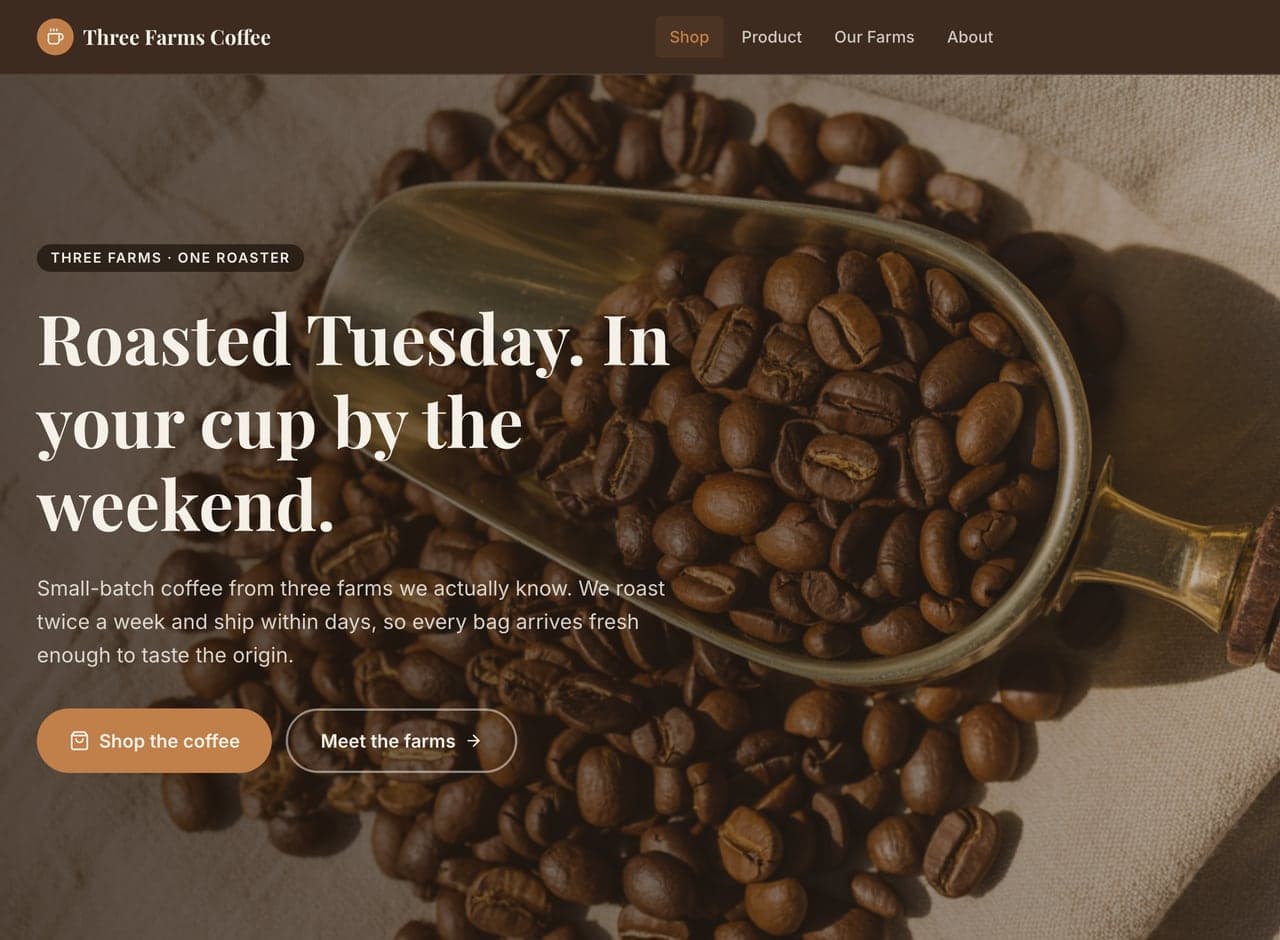
So we’re not going to show you one. These are three real, published Helm builds in other trades — same conversation, same builder. Two of them have a guide of their own if you want to see how the advice changed for a different business.


Common questions
Can customers buy and pay on the site?
Yes. Stripe payments are part of what Helm wires up when you go live, so the site can take a real order rather than sending people somewhere else to check out.
Can I use my own product photos?
Yes, and on a product site you should — your real photography is the most persuasive thing on the page. Helm builds the layout for it and you add your own images once the site is built.
Can I update the site when I add a product or run a promotion?
Yes. Click into the page and edit it, or describe the change and Helm makes it. Your range and your offers move often, so this is meant to be something you handle yourself in a minute.
Tell Helm about your e-commerce brand.
A few minutes of conversation, then a plan you read and approve before anything gets built.
Start a planFree to start — you see exactly what Helm produces for your e-commerce brand before you decide anything.