A website for your online marketplace
A marketplace has to persuade two entirely different people on the same site: the ones who supply and the ones who buy. A page written for one leaves the other feeling like an afterthought — and a marketplace only works when both sides actually show up.
What an online marketplace’s website actually needs
Five things, in the order they matter. The first one is most of the job.
Speak to both sides without blurring them together
Sellers and buyers want opposite things — one wants demand, the other wants selection and safety. A single averaged pitch persuades neither, so give each side its own clear path from the first screen rather than forcing both to read a page written for someone else.
Face the cold-start problem instead of hiding it
Early on, a marketplace is nearly empty, and pretending otherwise breaks the moment someone looks closely. Being honest about being early — a founding cohort, an invitation, a waitlist — turns the emptiness into a reason to get in first rather than a reason to leave.
Make trust and safety something people can see
People handing money or goods to a stranger through your platform need to see how you keep that safe: verification, reviews, what happens when something goes wrong. On a marketplace this isn't reassurance at the margin — it decides whether either side is willing to transact at all.
Give each side its own reason to sign up first
A seller signs up for reach; a buyer signs up for selection or price. Ask for the signup at the point where you've just made that side's case, and tailor what you promise to who you're asking, instead of one generic call to action that fits neither of them well.
Explain how the money and the match actually work
Both sides want to know the mechanics before they commit — what it costs to list, how payment flows, how a buyer and a seller are matched. Laying that out plainly, rather than leaving it to be discovered after signup, separates a marketplace people trust from one they test once and abandon.
None of that is a to-do list for you.
Four of your team are working today. Each one owns a stage, and each stage happens for your online marketplace specifically — not for a category you picked off a menu.

Atlas
Asks what your online marketplace actually does — what you specialise in, who calls you, and what you want more of.

Orion
Turns that into a plan you read before anything is built — including which of the five above your page leads with.

Forge
Builds the whole site: the pages, the words, the imagery and the way people get in touch. You can watch or close the tab.

Compass
Puts it live on your own domain, and wires up booking and payments when you’re ready to take money through it.


Echo markets and Ledger counts. Neither has shipped, so neither is on your team yet — we would rather show you the empty chairs.
We haven’t built an online marketplace yet.
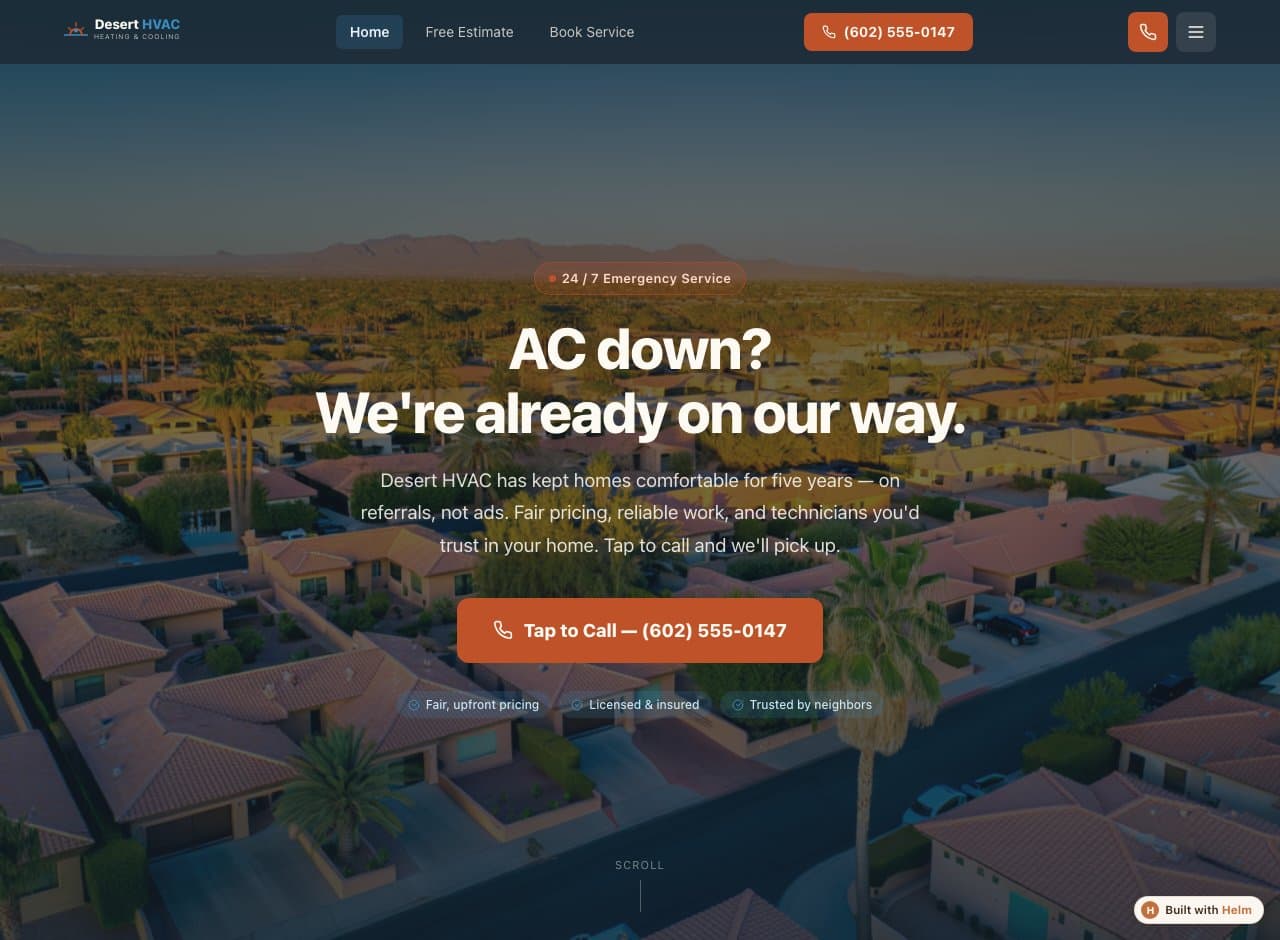
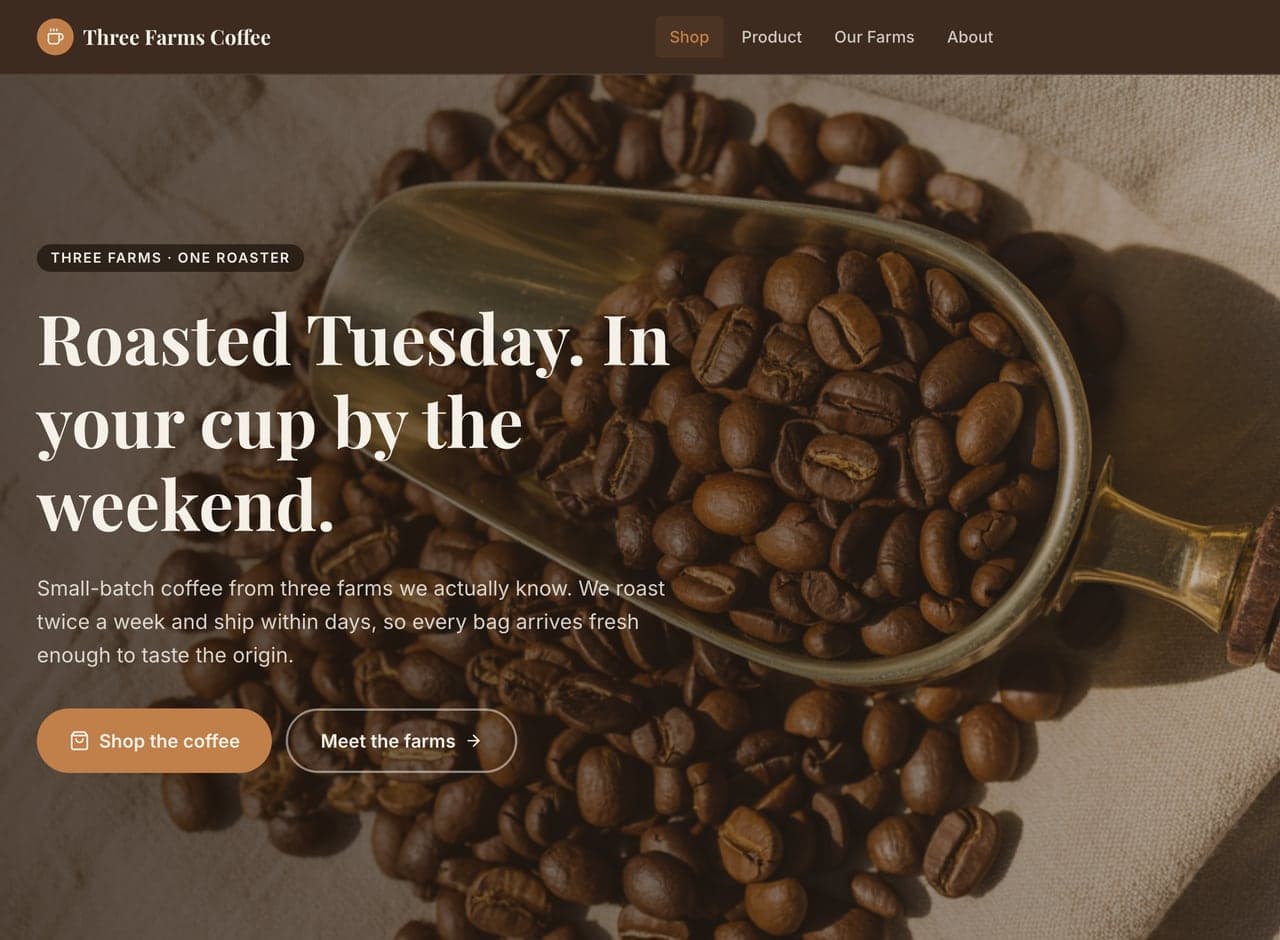
So we’re not going to show you one. These are three real, published Helm builds in other trades — same conversation, same builder. Two of them have a guide of their own if you want to see how the advice changed for a different business.

Common questions
Can both sellers and buyers sign up through the site?
Yes. Signup capture can be set up for each side when you go live, so the same site can build a supply list and a demand list without the two getting tangled together.
Can I take payments through the marketplace?
Stripe payments can be connected when you go live. How the money moves between the two sides is your platform's own logic; the site handles the front door and the checkout that leads into it.
Can I launch with just one side first?
Yes, and it's often the right move. Tell Helm which side you're seeding first during the conversation and the plan leads with that audience, with the other side's path ready to switch on when you are.
Tell Helm about your online marketplace.
A few minutes of conversation, then a plan you read and approve before anything gets built.
Start a planFree to start — you see exactly what Helm produces for your online marketplace before you decide anything.