A website for your AI product
An AI product's website has a trust problem the rest of software doesn't: the category is saturated with claims, and visitors have learned to discount them. The site that shows a concrete result and is honest about the limits stands out precisely because so few are.
What an AI product’s website actually needs
Five things, in the order they matter. The first one is most of the job.
Show a concrete result, not an adjective
Every AI product on the internet claims to be powerful and intelligent, so those words now persuade no one. A single real example of the product taking an input and producing a useful output does more than a page of capability language, because it proves the thing works instead of asserting it.
Be honest about what it can't do yet
Overclaiming is the fastest way to lose an AI audience that has been burned before. Being straight about where the product is strong and where it's still limited reads as confidence, not weakness, and it sets the expectation that makes a new user's first session a success rather than a letdown.
Answer the data question before it's asked
Anyone considering an AI tool is quietly wondering what happens to what they feed it — whether it trains on their input, who can see it, what's kept. Saying plainly how you handle their data, up front, removes an objection that otherwise ends the visit in silence rather than in a signup.
Explain what it's for, not how it's built
Visitors care what the product does for them, not which model or technique sits behind it. Describe the job it does in the language of the person with the problem, and keep the architecture for those who ask — leading with the machinery loses everyone who just wanted the outcome.
Make it easy to try, because trying is believing
With AI especially, a person convinces themselves by using it, not by reading about it. Put the shortest possible path to a first result on the page — a trial, a signup, a way in — because the moment someone sees it work on their own input is the moment they're actually sold.
None of that is a to-do list for you.
Four of your team are working today. Each one owns a stage, and each stage happens for your AI product specifically — not for a category you picked off a menu.

Atlas
Asks what your AI product actually does — what you specialise in, who calls you, and what you want more of.

Orion
Turns that into a plan you read before anything is built — including which of the five above your page leads with.

Forge
Builds the whole site: the pages, the words, the imagery and the way people get in touch. You can watch or close the tab.

Compass
Puts it live on your own domain, and wires up booking and payments when you’re ready to take money through it.


Echo markets and Ledger counts. Neither has shipped, so neither is on your team yet — we would rather show you the empty chairs.
We haven’t built an AI product yet.
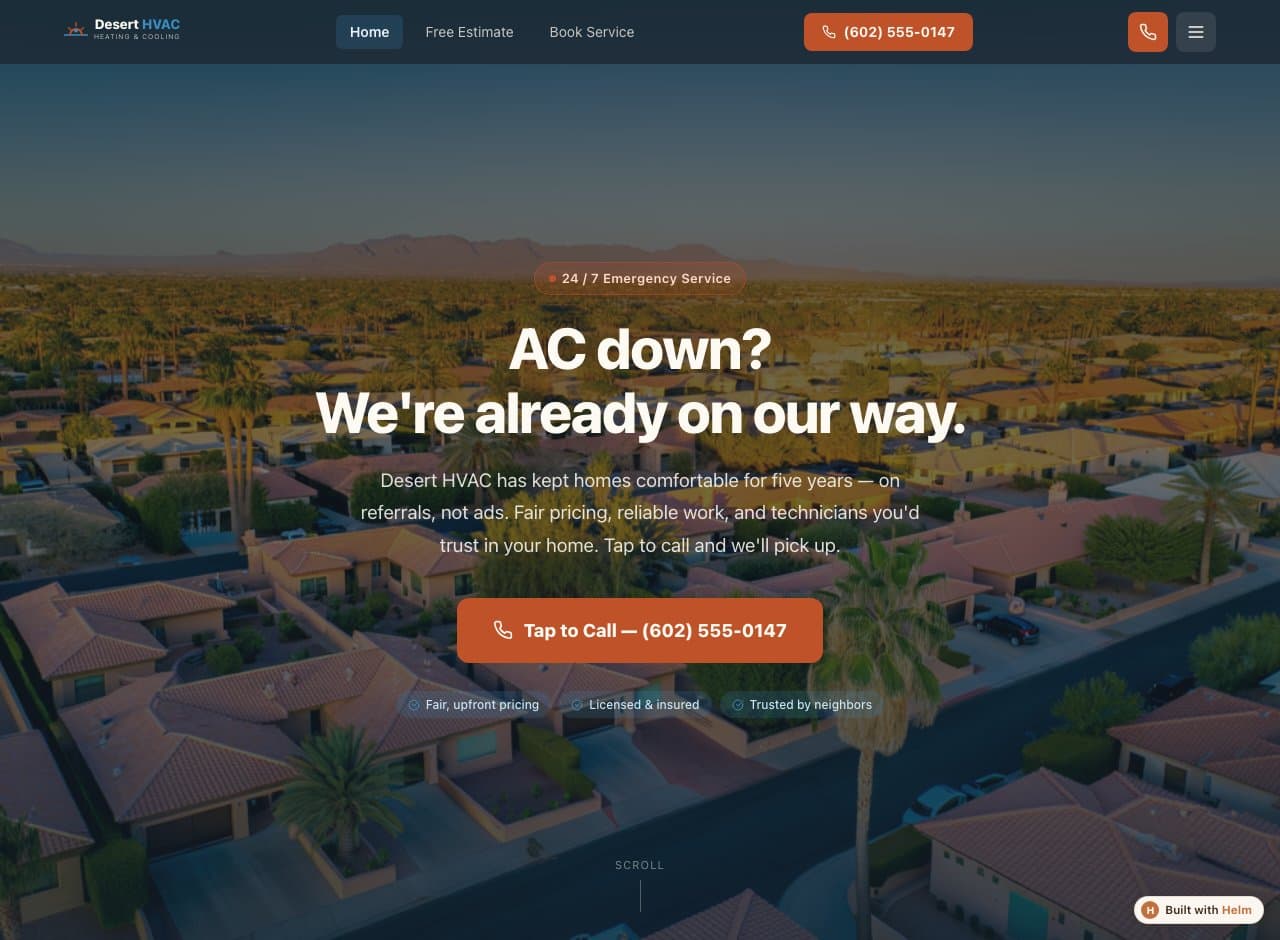
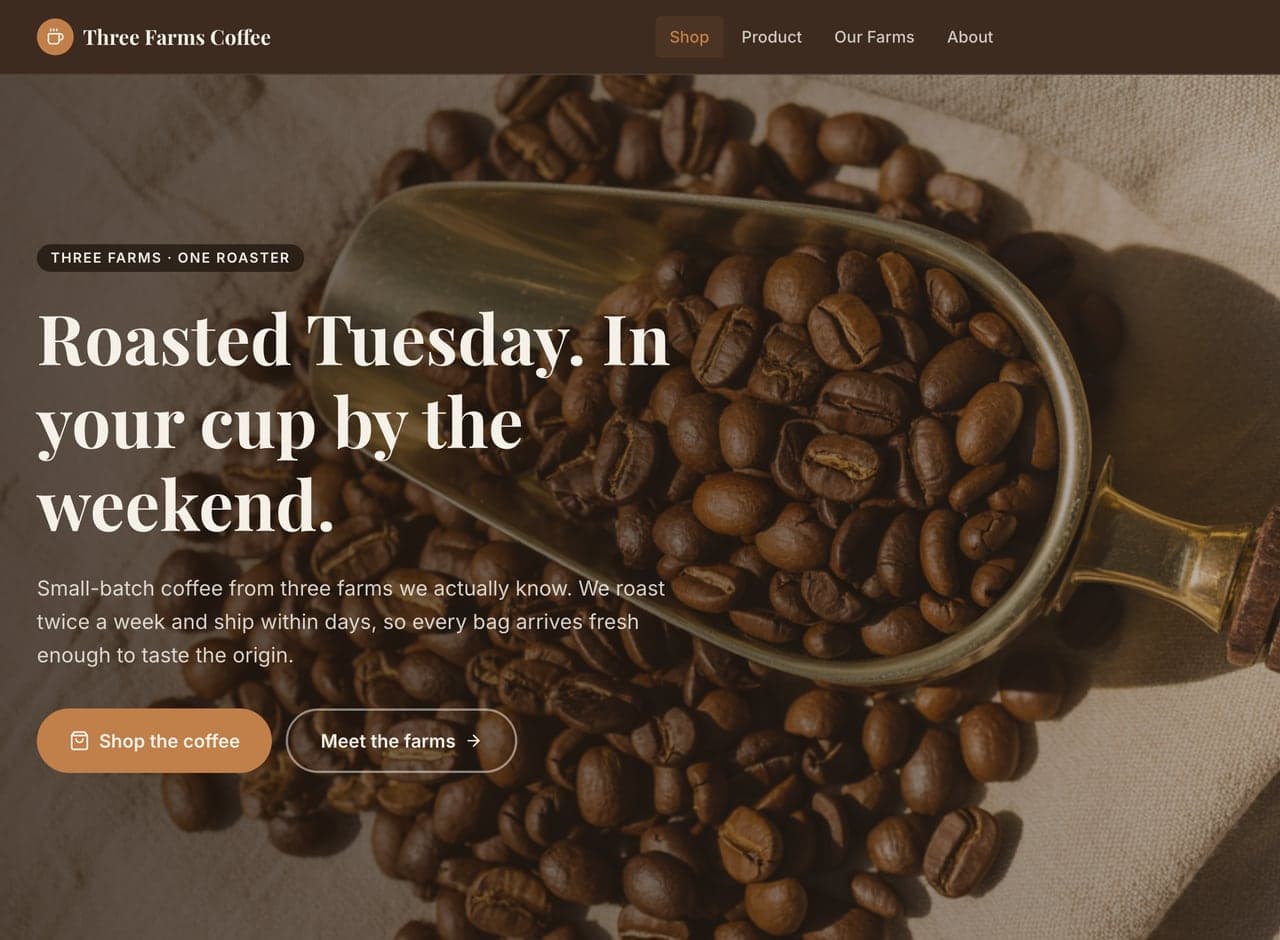
So we’re not going to show you one. These are three real, published Helm builds in other trades — same conversation, same builder. Two of them have a guide of their own if you want to see how the advice changed for a different business.

Common questions
Does Helm build the AI model, or the site around it?
The site — the pages that explain your product, show what it does, and turn visitors into signups. The model and the product are yours; this is the front door that sends the right people into them.
Can visitors sign up or join a waitlist?
Yes. Signup capture and Stripe payments can both be connected when you go live, whether you're taking paying users now or building a waitlist ahead of launch.
Can I keep the site current as the product improves?
Yes. Click into any copy and edit it, or describe the change and Helm makes it. AI products change quickly, so the site is built to be something you update yourself rather than request.
Tell Helm about your AI product.
A few minutes of conversation, then a plan you read and approve before anything gets built.
Start a planFree to start — you see exactly what Helm produces for your AI product before you decide anything.