A website for your restaurant
Almost everyone arriving at a restaurant website wants one of two things: the menu, or whether you're open. A site that makes either of those hard is failing at the only job it has.
What a restaurant’s website actually needs
Five things, in the order they matter. The first one is most of the job.
The menu is the website
It is by a wide margin the most-visited thing on any restaurant site, and it needs to be real text on the page — current, and readable on a phone without pinching. A menu that's a PDF is the most common mistake in this category and the most costly one.
Hours have to be right, holidays included
Nothing burns goodwill faster than someone driving over and finding a locked door. Your hours will change — for holidays, for staffing, for the season — so what matters is that you can correct them yourself in under a minute, from a phone, on the day.
Most people are already nearby
A great deal of restaurant traffic is someone standing a few streets away deciding where to eat in the next ten minutes. Address, a map, parking, and how to find the door should never be more than one tap from wherever they land.
Reservations, waitlist or walk-in — say which
If you don't take bookings, saying so plainly prevents a bad first interaction. If you do, having it on your own page rather than only on someone else's platform keeps the relationship, the data and the cover.
Photographs of your actual food
Every restaurant site on earth uses beautiful food photography, so stock imagery is spotted instantly — and it quietly suggests the real food wasn't worth showing. A phone photograph of your actual plate beats a perfect photograph of someone else's.
None of that is a to-do list for you.
Four of your team are working today. Each one owns a stage, and each stage happens for your restaurant specifically — not for a category you picked off a menu.

Atlas
Asks what your restaurant actually does — what you specialise in, who calls you, and what you want more of.

Orion
Turns that into a plan you read before anything is built — including which of the five above your page leads with.

Forge
Builds the whole site: the pages, the words, the imagery and the way people get in touch. You can watch or close the tab.

Compass
Puts it live on your own domain, and wires up booking and payments when you’re ready to take money through it.


Echo markets and Ledger counts. Neither has shipped, so neither is on your team yet — we would rather show you the empty chairs.
We haven’t built a restaurant yet.
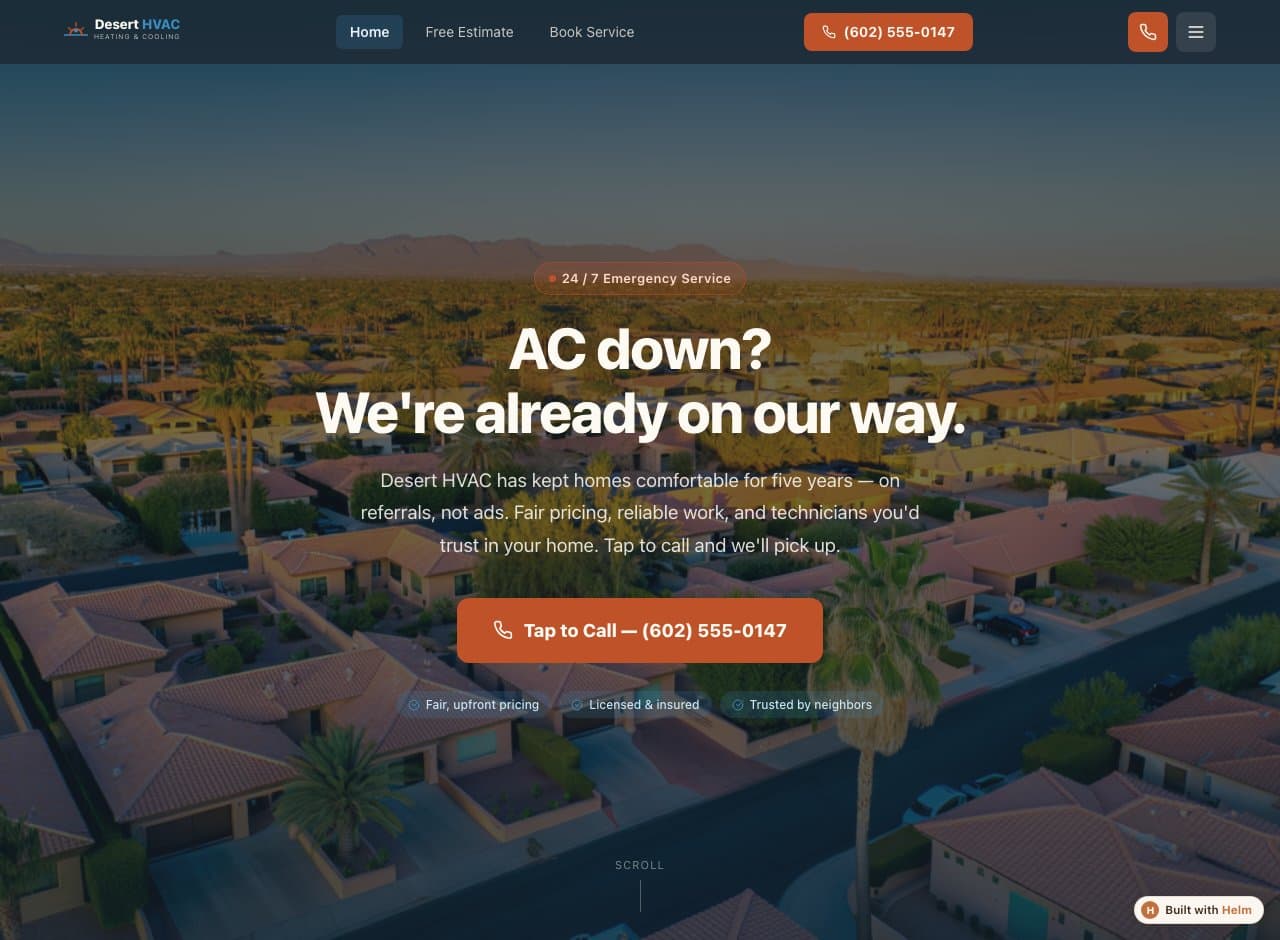
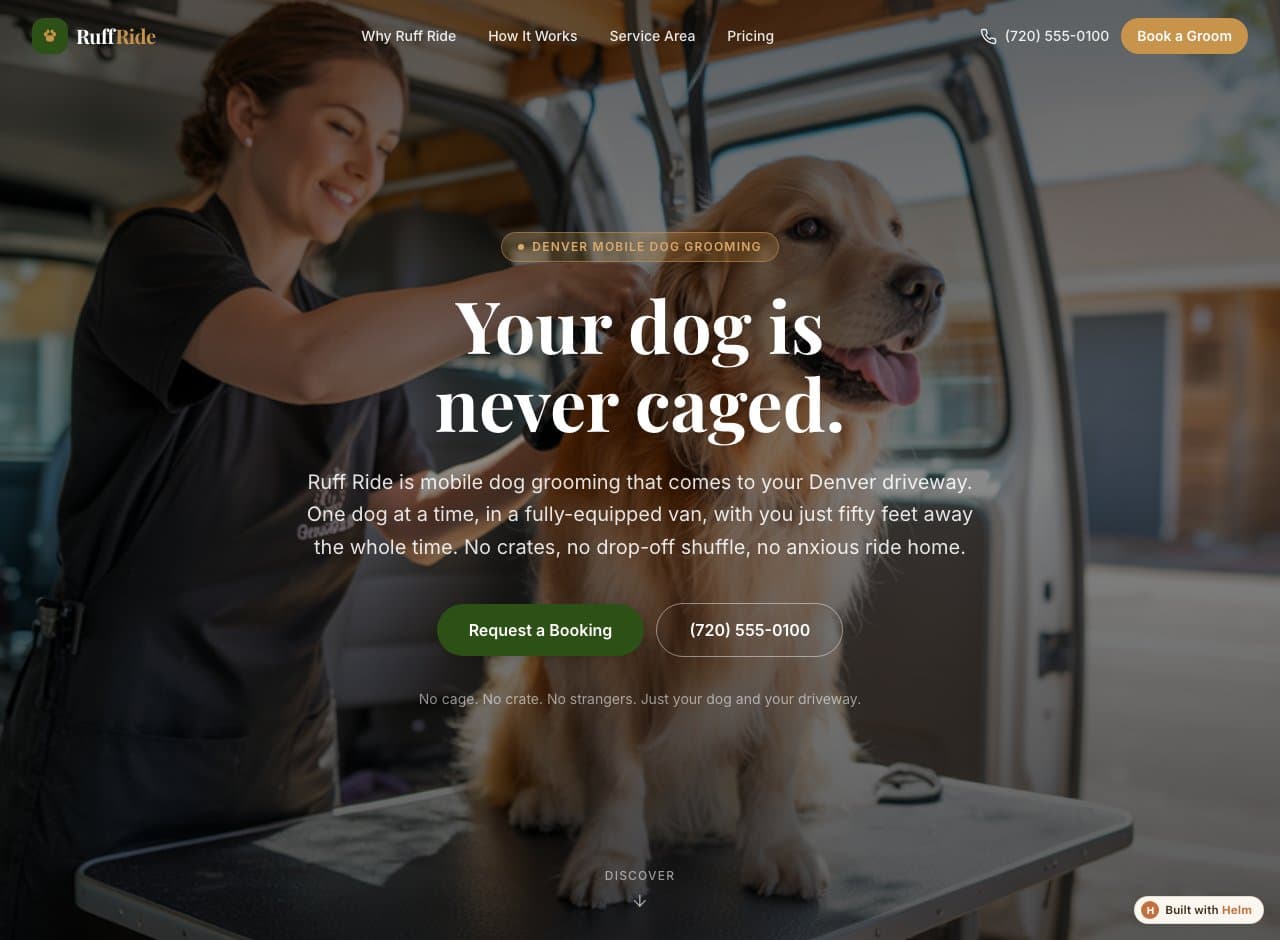
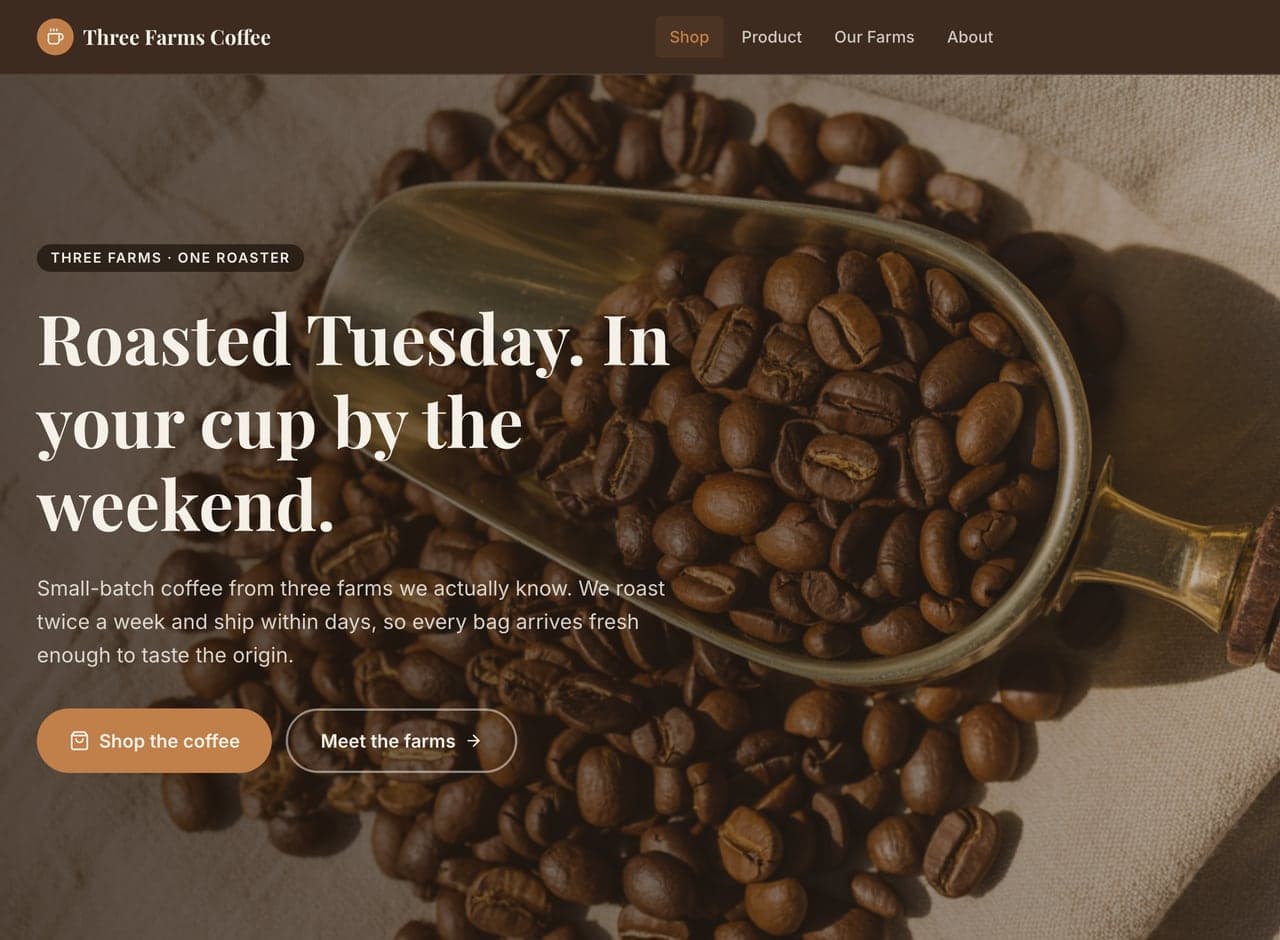
So we’re not going to show you one. These are three real, published Helm builds in other trades — same conversation, same builder. Two of them have a guide of their own if you want to see how the advice changed for a different business.
Common questions
How do I change the menu when the specials change?
Click into the menu on the page and edit it. Menus change constantly, so this needs to be something you do yourself in a minute rather than something you request and wait for.
Can people book a table through the site?
Yes — a booking flow is built as part of the site and can be wired up when you go live.
Do I need a separate site if I have more than one location?
Usually not. Tell Helm about every location during the conversation and the plan accounts for them, because hours, menus and directions all differ per site and that's what people are looking for.
Tell Helm about your restaurant.
A few minutes of conversation, then a plan you read and approve before anything gets built.
Start a planFree to start — you see exactly what Helm produces for your restaurant before you decide anything.