A website for your auto repair shop
Auto repair carries a trust deficit that individual shops didn't earn and still have to pay for. Your website's first job isn't to list services — it's to sound like the shop that doesn't do the thing everyone is bracing for.
What an auto repair shop’s website actually needs
Five things, in the order they matter. The first one is most of the job.
Address the trust problem directly
People arrive expecting to be sold something they don't need. Explaining how you estimate, that you call before doing anything beyond the quote, and that they can have their old parts back speaks to the actual objection instead of talking around it.
Name what you're genuinely strongest at
European diesel, hybrids and EVs, transmissions, fleet servicing, classic restoration. 'All makes and models' is what everyone writes and it matches nothing anyone searches for. The narrower claim brings in the work you actually want.
Explain what happens to their day
Whether there's a loaner, a shuttle, or a decent place to sit; how long a common job takes; whether they can drop keys the night before. For most customers this is as much a logistics decision as a mechanical one, and it's rarely on the page.
Certifications and warranty, in plain words
Technician certifications and the warranty on parts and labour are the things that justify not being the cheapest quote in town. They're usually buried at the bottom in a language nobody reads.
You're competing inside a few miles
For most drivers, proximity decides it. Your address, the neighbourhoods you're known in, and your hours are doing more search work than anything else you could write, so they belong on the page as text rather than inside an image.
None of that is a to-do list for you.
Four of your team are working today. Each one owns a stage, and each stage happens for your auto repair shop specifically — not for a category you picked off a menu.

Atlas
Asks what your auto repair shop actually does — what you specialise in, who calls you, and what you want more of.

Orion
Turns that into a plan you read before anything is built — including which of the five above your page leads with.

Forge
Builds the whole site: the pages, the words, the imagery and the way people get in touch. You can watch or close the tab.

Compass
Puts it live on your own domain, and wires up booking and payments when you’re ready to take money through it.


Echo markets and Ledger counts. Neither has shipped, so neither is on your team yet — we would rather show you the empty chairs.
We haven’t built an auto repair shop yet.
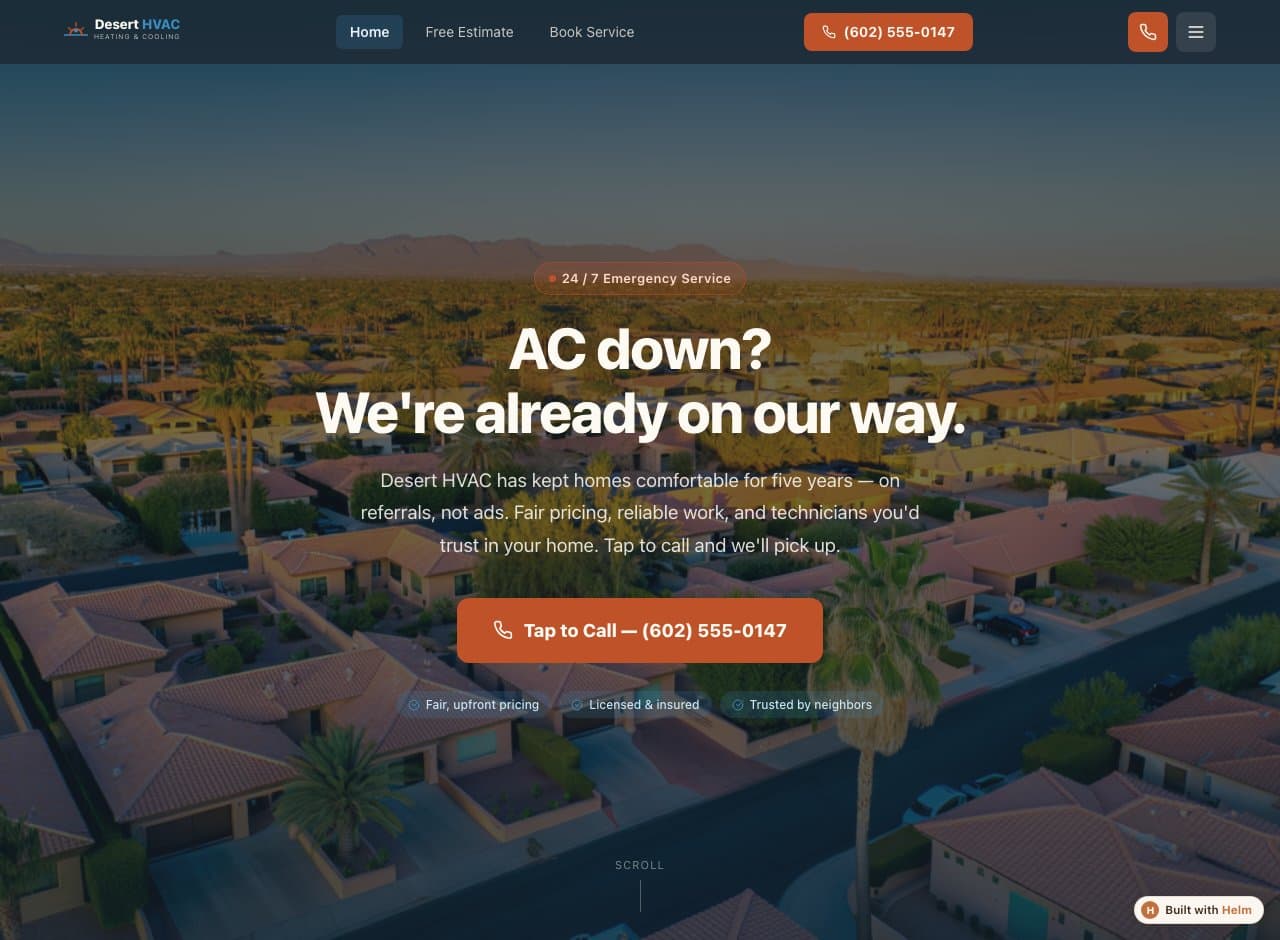
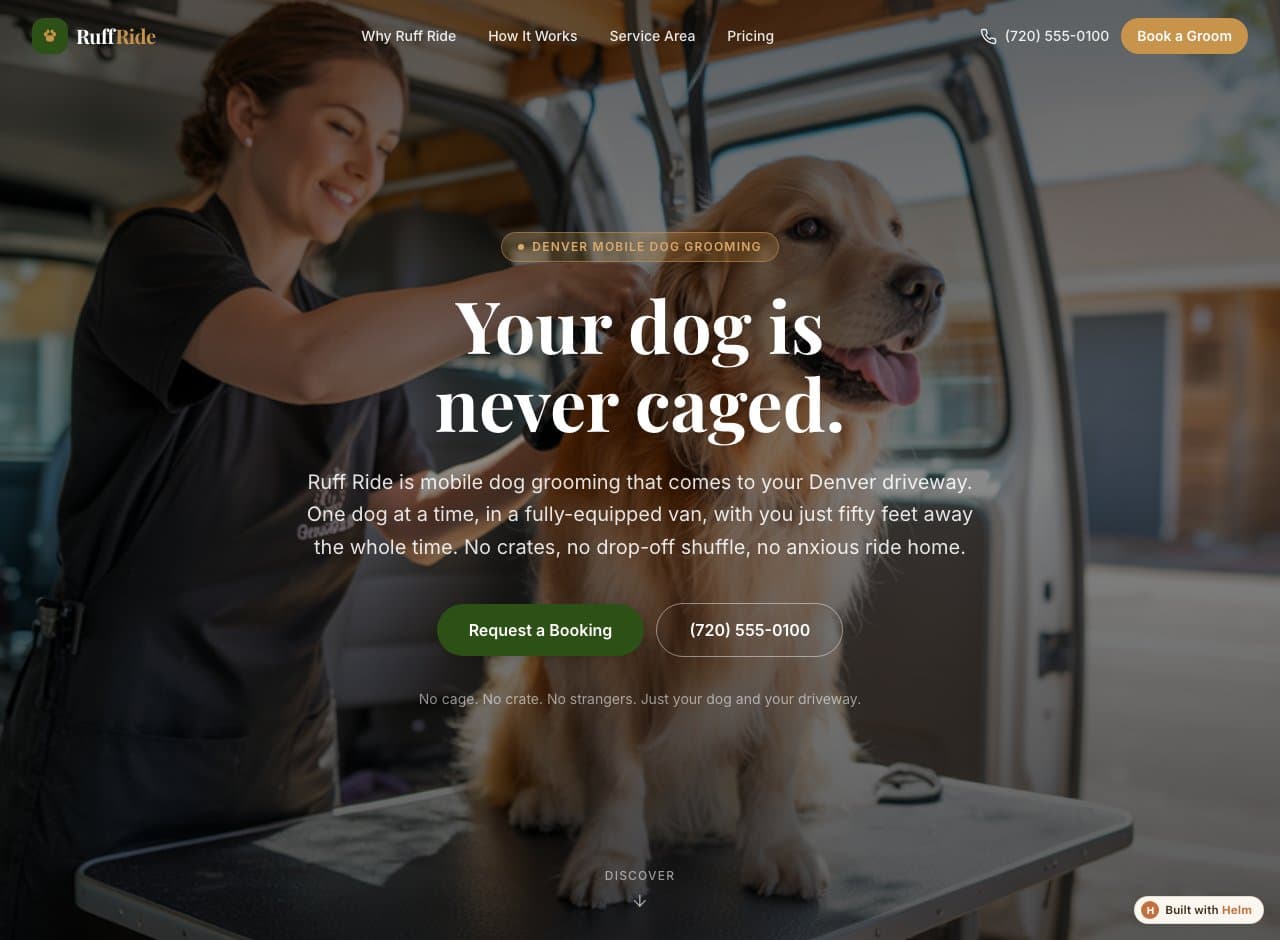
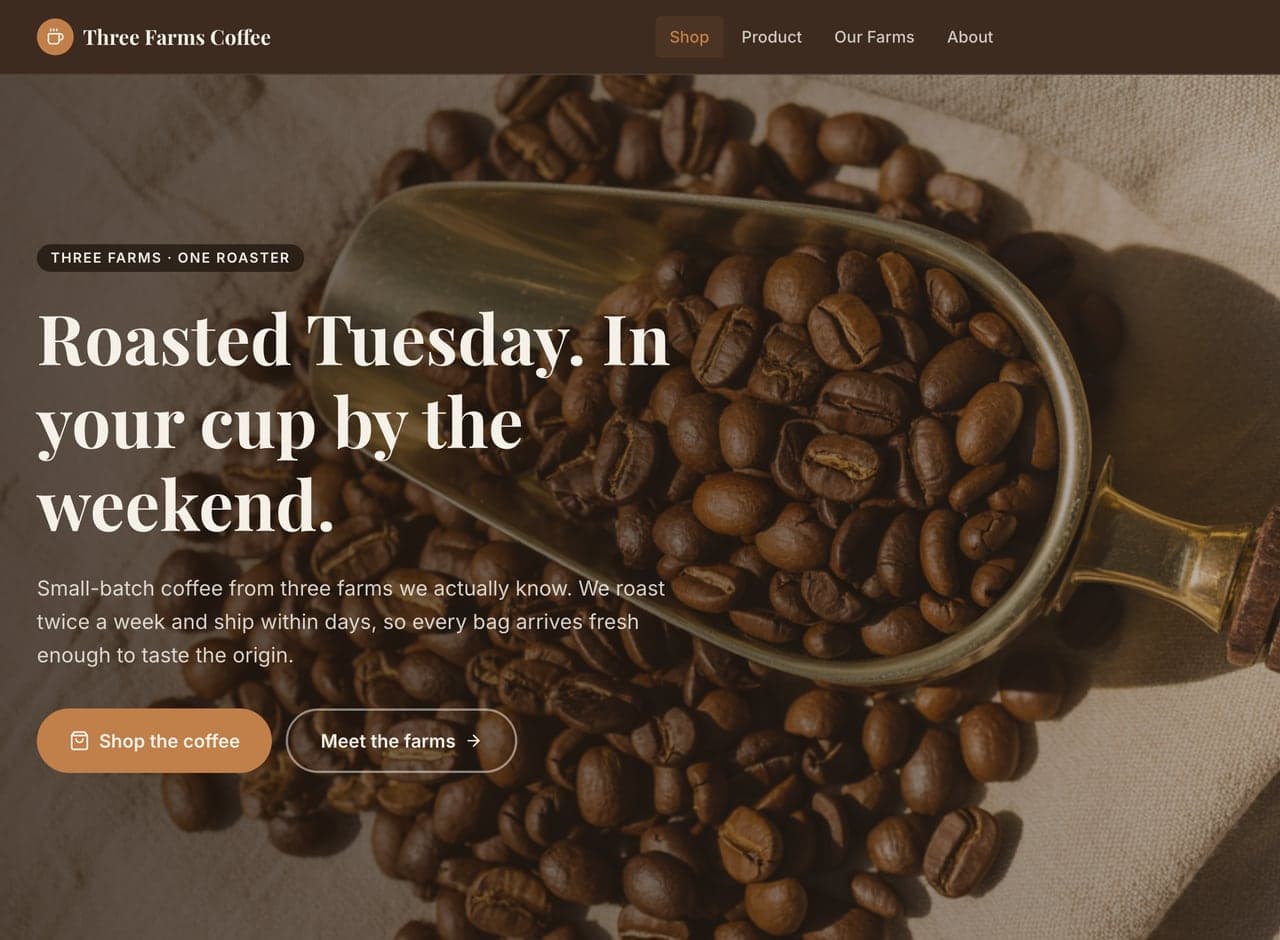
So we’re not going to show you one. These are three real, published Helm builds in other trades — same conversation, same builder. Two of them have a guide of their own if you want to see how the advice changed for a different business.
Common questions
Can customers request a quote or book a service online?
Yes — a quote request and booking flow are built as part of the site, and scheduling can be wired up when you go live.
Should I publish prices for common jobs?
For standardised work like an oil service, brakes or a diagnostic fee, a real number builds a lot of trust in a category short of it. For diagnosis-dependent repairs it's fairer to publish the diagnostic fee and explain what happens next.
We specialise in one make — should the whole site say so?
Usually yes. Specialist shops do better being unmistakably the specialist than being one more general garage, and Helm builds the plan around whatever you tell it you want more of.
Tell Helm about your auto repair shop.
A few minutes of conversation, then a plan you read and approve before anything gets built.
Start a planFree to start — you see exactly what Helm produces for your auto repair shop before you decide anything.