A website for your personal training business
A personal training website has an unusual problem: the product is a person, and the customer's real fear isn't the price — it's walking into a gym and being humiliated. Almost every trainer's site addresses the first and ignores the second.
What a personal training business’s website actually needs
Five things, in the order they matter. The first one is most of the job.
You are the thing being bought
Clients choose a trainer, not a service. Your background, your qualifications, who you're genuinely good with and why you do this belong above any list of packages, because that's the decision they're actually making.
Be specific about who you're for
Post-natal, over-fifties strength, first-timers who have never set foot in a gym, marathon preparation, rehabilitation alongside a physio. A trainer whose site says they help everyone reads as a trainer with no particular expertise in anything.
Describe what a session and a week actually look like
The unspoken worry is embarrassment, not effort. Explaining in ordinary language what happens in the first session, what you'll ask, and what the first week involves removes more hesitation than any before-and-after photograph.
Be straight about the commitment
Blocks of sessions, monthly coaching and online programming are very different commitments. Say what happens if someone needs to reschedule, and what your cancellation terms are — that is where trainer relationships usually break down, and stating it early prevents it.
Make the first step small
A consultation or a single trial session is a far smaller thing to say yes to than a twelve-week block. Build the site around that first small ask, and let the bigger commitment come after they've met you.
None of that is a to-do list for you.
Four of your team are working today. Each one owns a stage, and each stage happens for your personal training business specifically — not for a category you picked off a menu.

Atlas
Asks what your personal training business actually does — what you specialise in, who calls you, and what you want more of.

Orion
Turns that into a plan you read before anything is built — including which of the five above your page leads with.

Forge
Builds the whole site: the pages, the words, the imagery and the way people get in touch. You can watch or close the tab.

Compass
Puts it live on your own domain, and wires up booking and payments when you’re ready to take money through it.


Echo markets and Ledger counts. Neither has shipped, so neither is on your team yet — we would rather show you the empty chairs.
We haven’t built a personal training business yet.
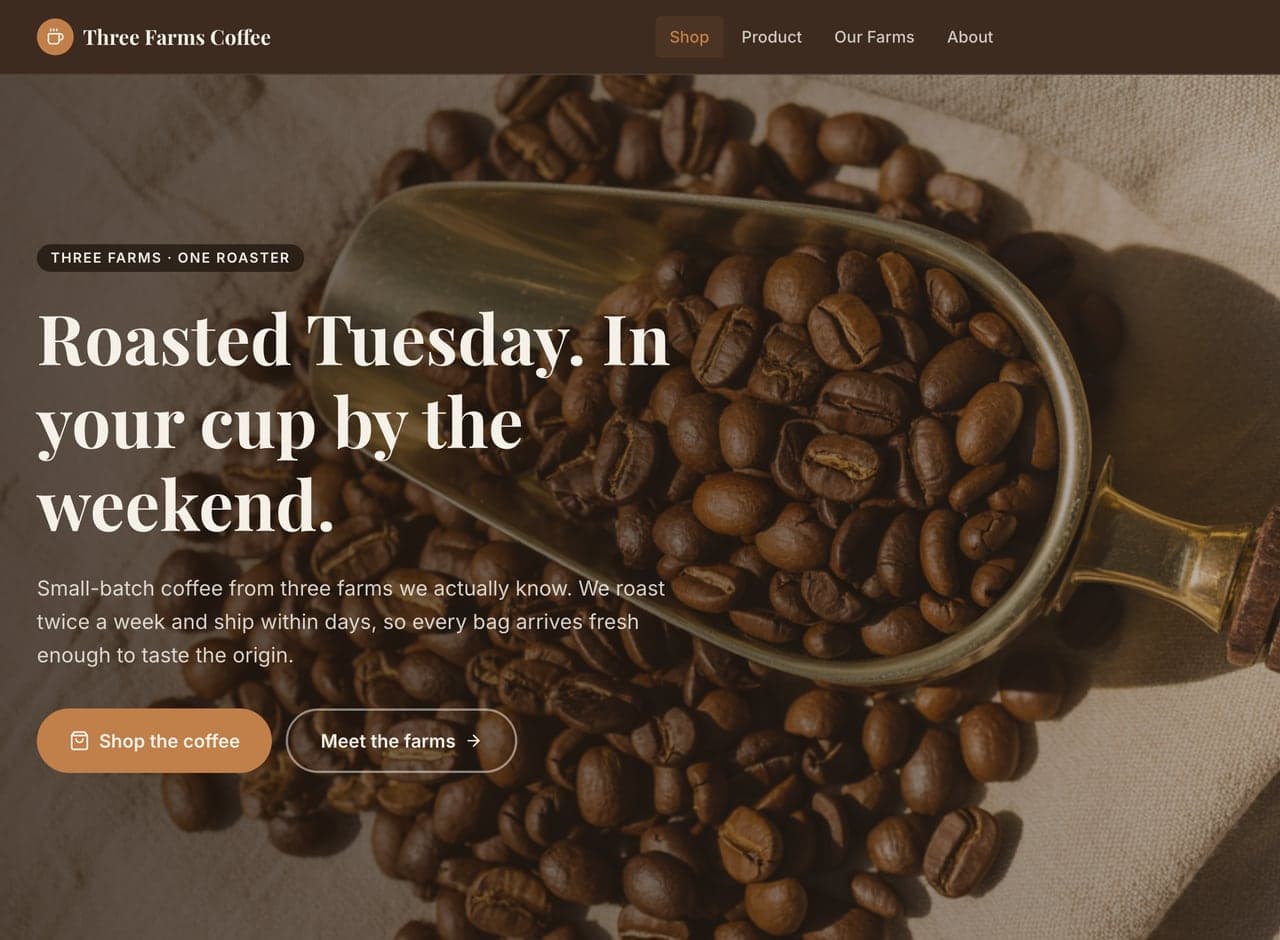
So we’re not going to show you one. These are three real, published Helm builds in other trades — same conversation, same builder. Two of them have a guide of their own if you want to see how the advice changed for a different business.


Common questions
Can people book and pay for sessions on the site?
Yes — booking and Stripe payments can both be connected when you go live, including for blocks of sessions.
Should I put my prices on the site?
Generally yes. Personal training is a considered purchase and people who can't find a number often assume the worst and don't ask. If your pricing genuinely varies, a starting figure with an honest explanation works better than nothing at all.
I don't have professional photos of myself — is that a problem?
Helm handles imagery as part of the build, so you're not blocked. It's still worth getting a few real photographs of you working with clients eventually, because on a trainer's site you are the main thing anyone is looking at.
Tell Helm about your personal training business.
A few minutes of conversation, then a plan you read and approve before anything gets built.
Start a planFree to start — you see exactly what Helm produces for your personal training business before you decide anything.