A website for your dental practice
A dental website has two jobs that have nothing to do with dentistry: answering the insurance question fast enough that nobody leaves, and lowering the anxiety of a person who has already been putting this off.
What a dental practice’s website actually needs
Five things, in the order they matter. The first one is most of the job.
The insurance answer belongs near the top
More people leave a dental site over an unanswered insurance question than over anything else on it. List the plans you take in plain text, and say clearly what you offer people without cover — a membership plan or a simple fee list is a real answer and silence is not.
Anxiety is the actual objection
A large share of the people reading your site have delayed care because they are afraid of it. A few honest sentences about how you handle nervous patients — what you do differently, what you'll talk them through — does more than a page of equipment specifications.
New patients need a different route from existing ones
Someone new wants to know what the first visit involves, what it costs, how long it takes and what to bring. Someone already with you just wants to rebook. Sending both through the same page makes the first group work too hard and irritates the second.
Be specific about what you do in-house
Implants, orthodontics, children, sedation, emergencies. Saying which of these you handle yourself and which you refer on is useful information rather than a weakness — and a practice that's clear about its scope reads as more confident, not less.
Hours outside working hours are a headline
Dental appointments compete directly with someone's job. If you open one evening a week or a Saturday morning, that is one of the most valuable facts on your entire site and it usually ends up in small print at the bottom.
None of that is a to-do list for you.
Four of your team are working today. Each one owns a stage, and each stage happens for your dental practice specifically — not for a category you picked off a menu.

Atlas
Asks what your dental practice actually does — what you specialise in, who calls you, and what you want more of.

Orion
Turns that into a plan you read before anything is built — including which of the five above your page leads with.

Forge
Builds the whole site: the pages, the words, the imagery and the way people get in touch. You can watch or close the tab.

Compass
Puts it live on your own domain, and wires up booking and payments when you’re ready to take money through it.


Echo markets and Ledger counts. Neither has shipped, so neither is on your team yet — we would rather show you the empty chairs.
We haven’t built a dental practice yet.
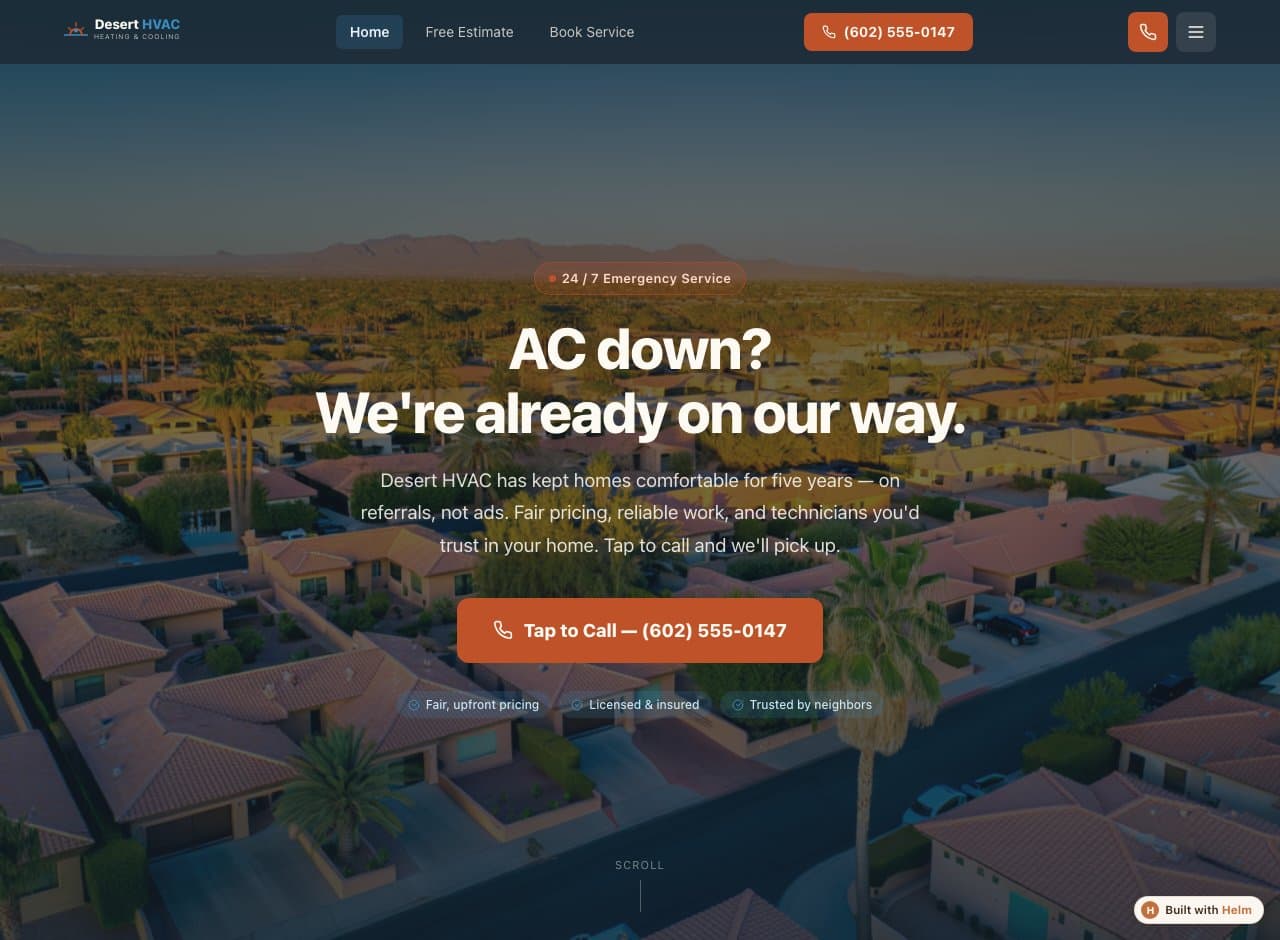
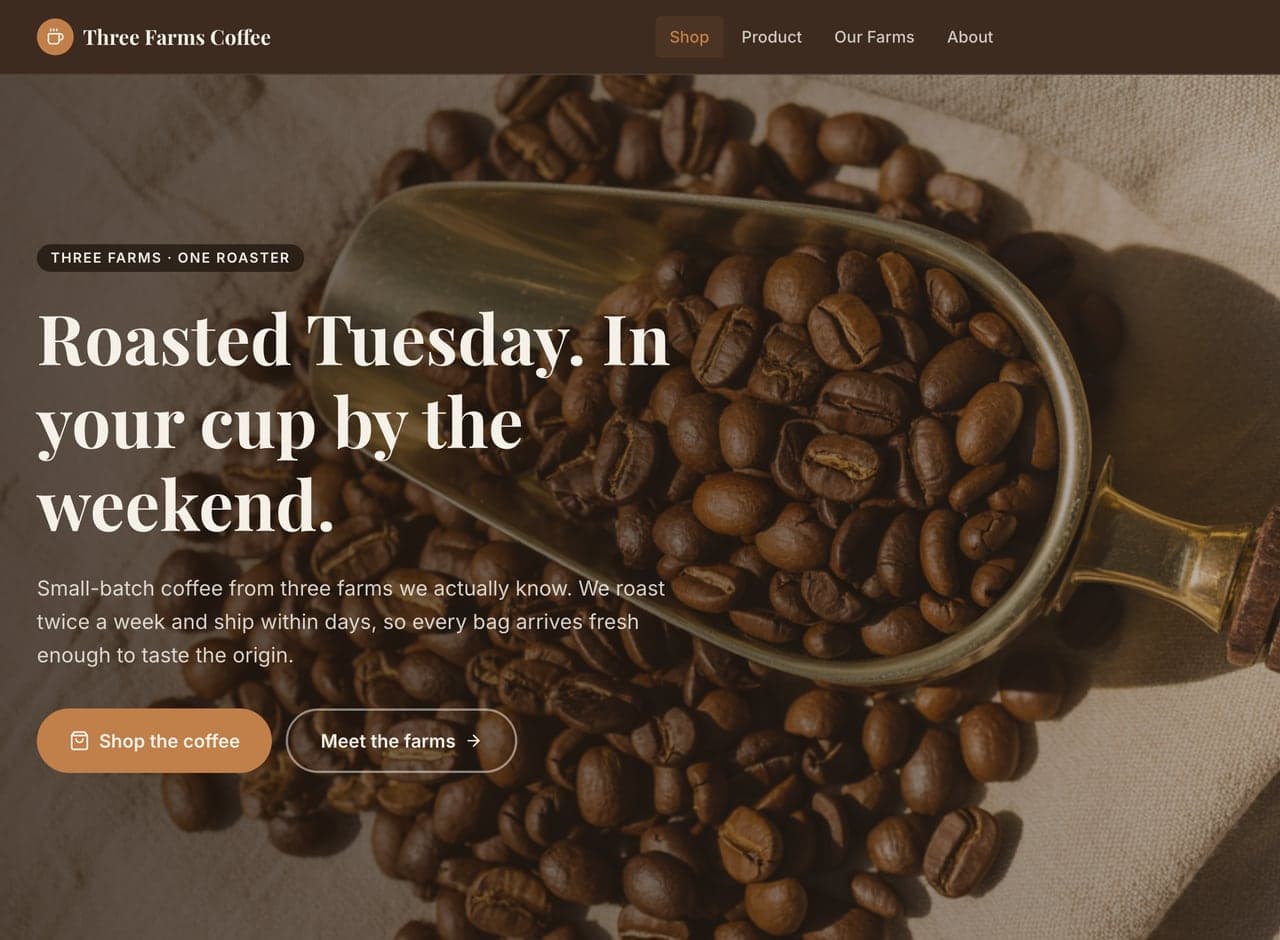
So we’re not going to show you one. These are three real, published Helm builds in other trades — same conversation, same builder. Two of them have a guide of their own if you want to see how the advice changed for a different business.

Common questions
Can patients request an appointment through the site?
Yes — an appointment request flow is built as part of the site, and scheduling can be wired up when you go live.
Can I list the insurance plans we accept?
Yes, and you should treat it as a living part of the site. You can edit the list yourself by clicking it, which matters because the plans you take change more often than the rest of the page does.
Do I have to write the clinical content myself?
No. Helm writes the site from your conversation. You should still read it before it goes out — you're the one who knows what your practice does and doesn't offer, and the site should say exactly that.
Tell Helm about your dental practice.
A few minutes of conversation, then a plan you read and approve before anything gets built.
Start a planFree to start — you see exactly what Helm produces for your dental practice before you decide anything.