A website for your online course
An online course is sold entirely on its page — no salesperson, no trial, just the words and the promise. That makes the sales page the product's most important asset, and the difference between a course that sells and one that doesn't is almost always the page, not the course.
What an online course’s website actually needs
Five things, in the order they matter. The first one is most of the job.
Lead with the outcome, not the syllabus
People buy a course for what they'll be able to do afterwards, not for the number of modules. Name the specific result — the skill, the portfolio piece, the problem gone — at the top of the page, and let the curriculum prove you can deliver it rather than standing in for the promise.
Say who it's for, and who it isn't
A course that claims to suit everyone leaves each individual reader unsure it's for them. Being explicit about the person it's built for — their level, their goal, where they're stuck — and honest about who shouldn't buy it makes the right student feel understood and keeps the wrong one from a refund.
Show the curriculum without giving it all away
A buyer wants to know what's inside before they pay, and a page that hides the curriculum feels like it's hiding something. Lay out what the course covers and the shape of the journey, enough that a reader can see the value, so the outline sells the depth instead of concealing it.
Make the price feel like the smaller number
A course price only looks high next to nothing — it looks small next to the outcome it delivers or the cost of staying stuck. Frame what the result is worth before you name the figure, and be clear about what's included, so the price reads as a fair trade rather than a hurdle.
Reduce the risk of clicking buy
The last hesitation before a purchase is 'what if this doesn't work for me'. A clear refund policy, a sample lesson, or an honest account of what results to expect answers that fear directly — and removing the final doubt is often what turns a page-reader into a buyer.
None of that is a to-do list for you.
Four of your team are working today. Each one owns a stage, and each stage happens for your online course specifically — not for a category you picked off a menu.

Atlas
Asks what your online course actually does — what you specialise in, who calls you, and what you want more of.

Orion
Turns that into a plan you read before anything is built — including which of the five above your page leads with.

Forge
Builds the whole site: the pages, the words, the imagery and the way people get in touch. You can watch or close the tab.

Compass
Puts it live on your own domain, and wires up booking and payments when you’re ready to take money through it.


Echo markets and Ledger counts. Neither has shipped, so neither is on your team yet — we would rather show you the empty chairs.
We haven’t built an online course yet.
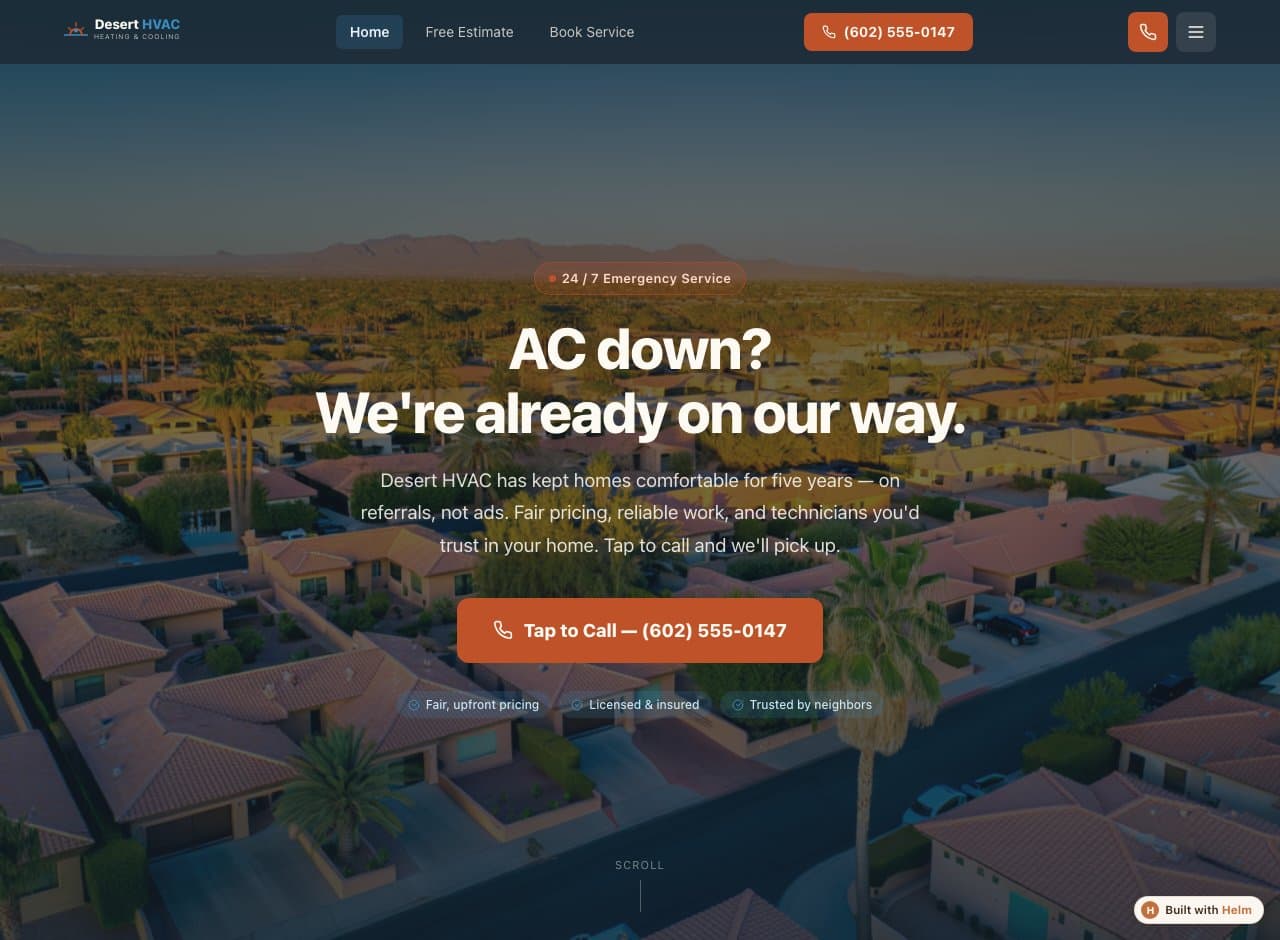
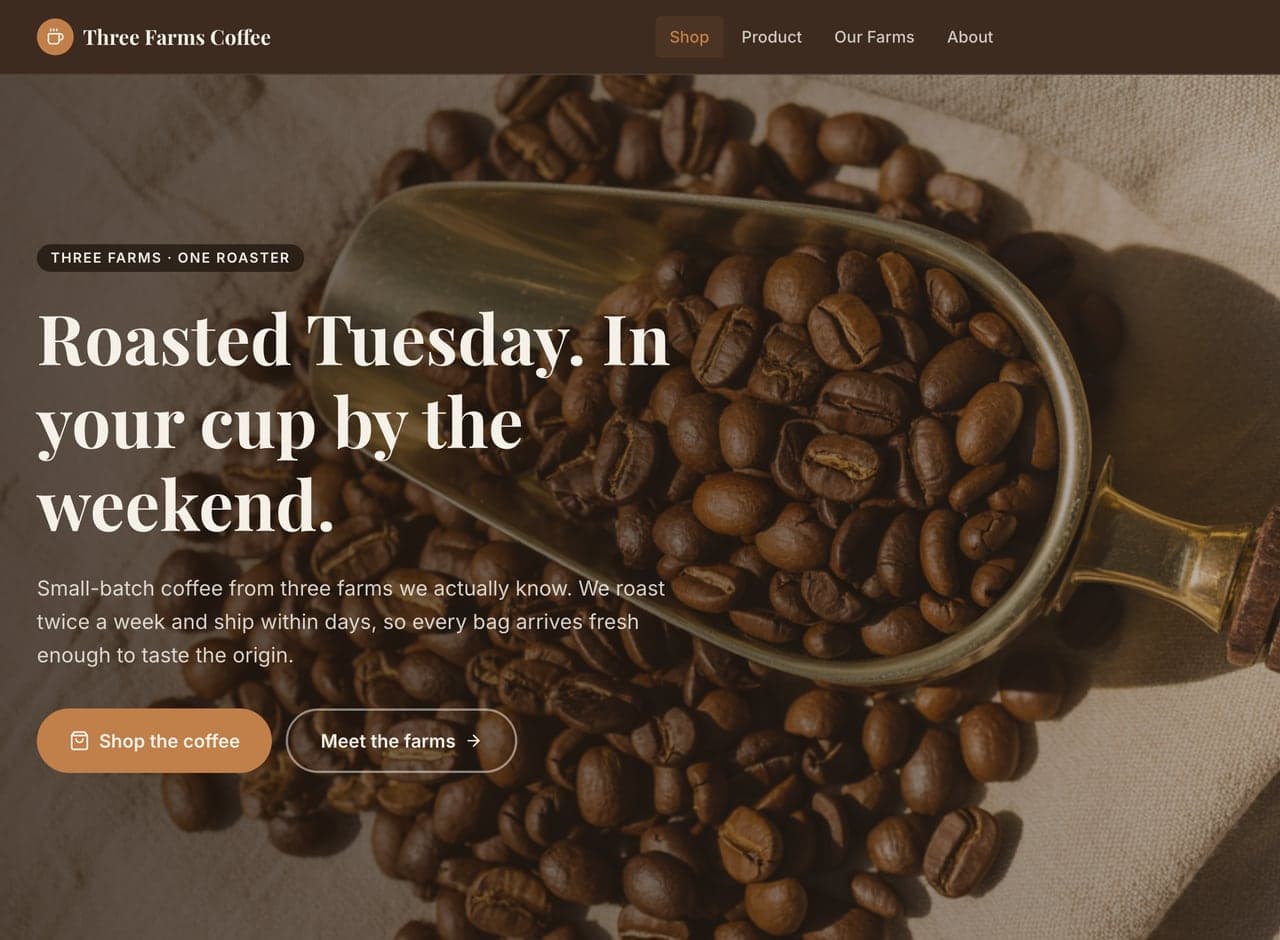
So we’re not going to show you one. These are three real, published Helm builds in other trades — same conversation, same builder. Two of them have a guide of their own if you want to see how the advice changed for a different business.

Common questions
Can students buy the course on the site?
Yes. Stripe payments are part of what Helm connects when you go live, so the sales page can take payment directly — including one-off purchases and payment plans.
Does Helm host the course videos too?
Helm builds the sales and marketing site — the page that sells the course and takes payment. Where the lessons themselves live is up to you; the site is the storefront that sends a paying student to them.
Can I update the page when I add a module or run a launch?
Yes. Click into the page and edit it, or describe the change and Helm makes it. Course launches run on updated pages and deadlines, so this is meant to be something you control yourself.
Tell Helm about your online course.
A few minutes of conversation, then a plan you read and approve before anything gets built.
Start a planFree to start — you see exactly what Helm produces for your online course before you decide anything.