A website for your newsletter or paid community
A newsletter or community needs a home that isn't rented from the platform it's published on — a page that makes the case for subscribing before it asks. Most creators point people straight at a bare signup box, which only converts the ones who were already sold.
What a newsletter or paid community’s website actually needs
Five things, in the order they matter. The first one is most of the job.
Make a sharp promise about what they'll get
A signup form is not a reason to sign up. Tell a visitor exactly what lands in their inbox and how often — the specific thing they'll know or be able to do that they can't right now — because a clear, narrow promise converts far better than an invitation to join a vague 'community'.
Let them feel the writing before they subscribe
People subscribe to a voice, and they can't judge a voice from a description of it. Showing a real issue, or the best few paragraphs you've written, lets someone decide they want more — a far stronger reason to hand over an email than a promise about content they haven't seen.
One signup, asking for the least you need
Competing calls to action split attention and lose subscribers. Give the page a single, obvious way in and ask only for the email — every extra field is a reason to close the tab, and you can always learn more about someone once they're actually on the list and reading.
If there's a paid tier, say plainly what it unlocks
A reader deciding whether to pay needs to know exactly what the money buys — what's behind the paywall, what free subscribers still get, what a member gets that a follower doesn't. Vagueness here reads as a trick; a plain list of what's included is what makes the upgrade feel fair.
Own the home, so a platform can't cut you off
Building your entire audience inside someone else's app means their rules and their reach decide your future. A home of your own — your domain, your signup, your list — survives when a platform changes its terms, and it's the difference between an audience you own and one you're only borrowing.
None of that is a to-do list for you.
Four of your team are working today. Each one owns a stage, and each stage happens for your newsletter or paid community specifically — not for a category you picked off a menu.

Atlas
Asks what your newsletter or paid community actually does — what you specialise in, who calls you, and what you want more of.

Orion
Turns that into a plan you read before anything is built — including which of the five above your page leads with.

Forge
Builds the whole site: the pages, the words, the imagery and the way people get in touch. You can watch or close the tab.

Compass
Puts it live on your own domain, and wires up booking and payments when you’re ready to take money through it.


Echo markets and Ledger counts. Neither has shipped, so neither is on your team yet — we would rather show you the empty chairs.
We haven’t built a newsletter or paid community yet.
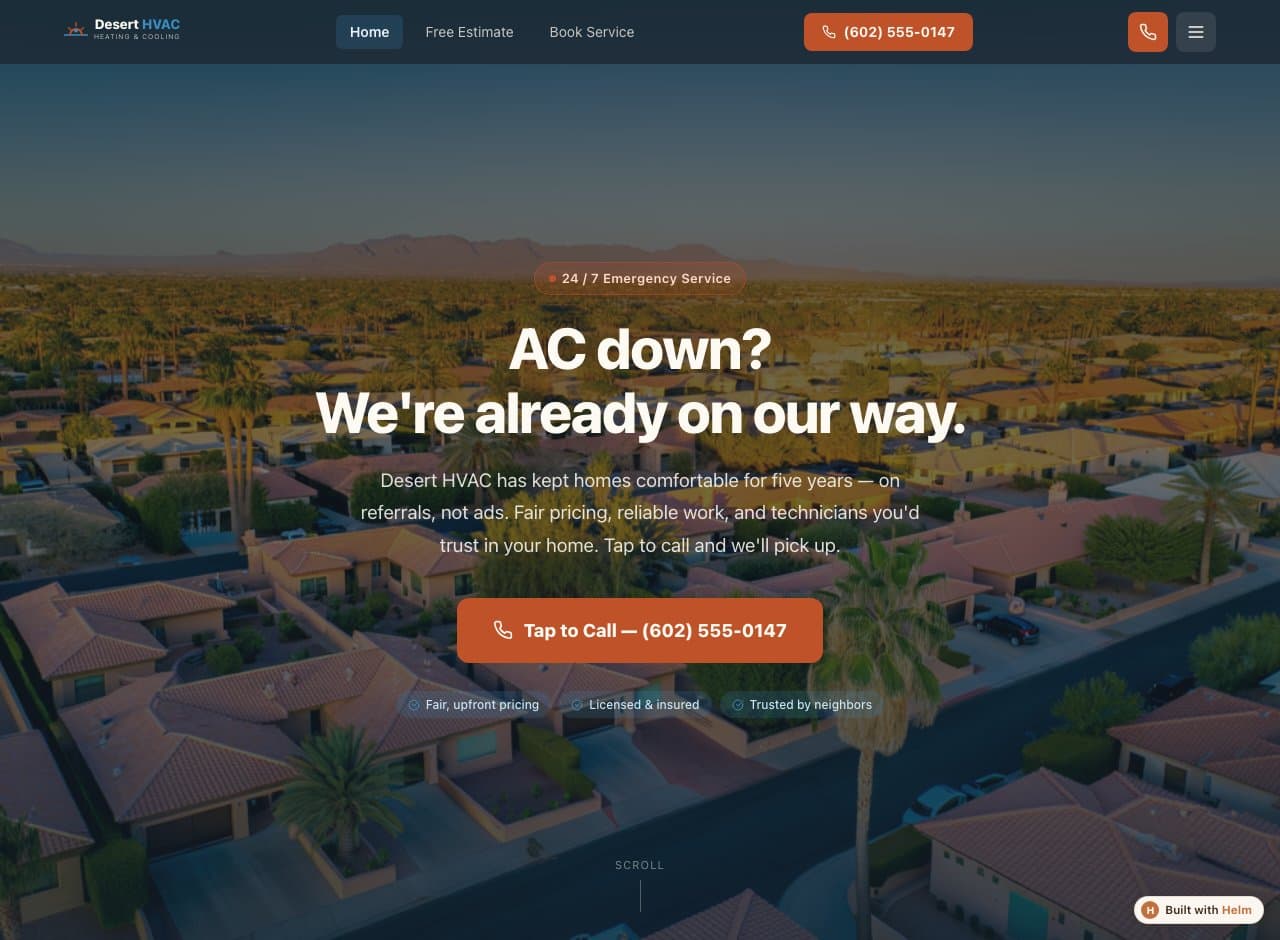
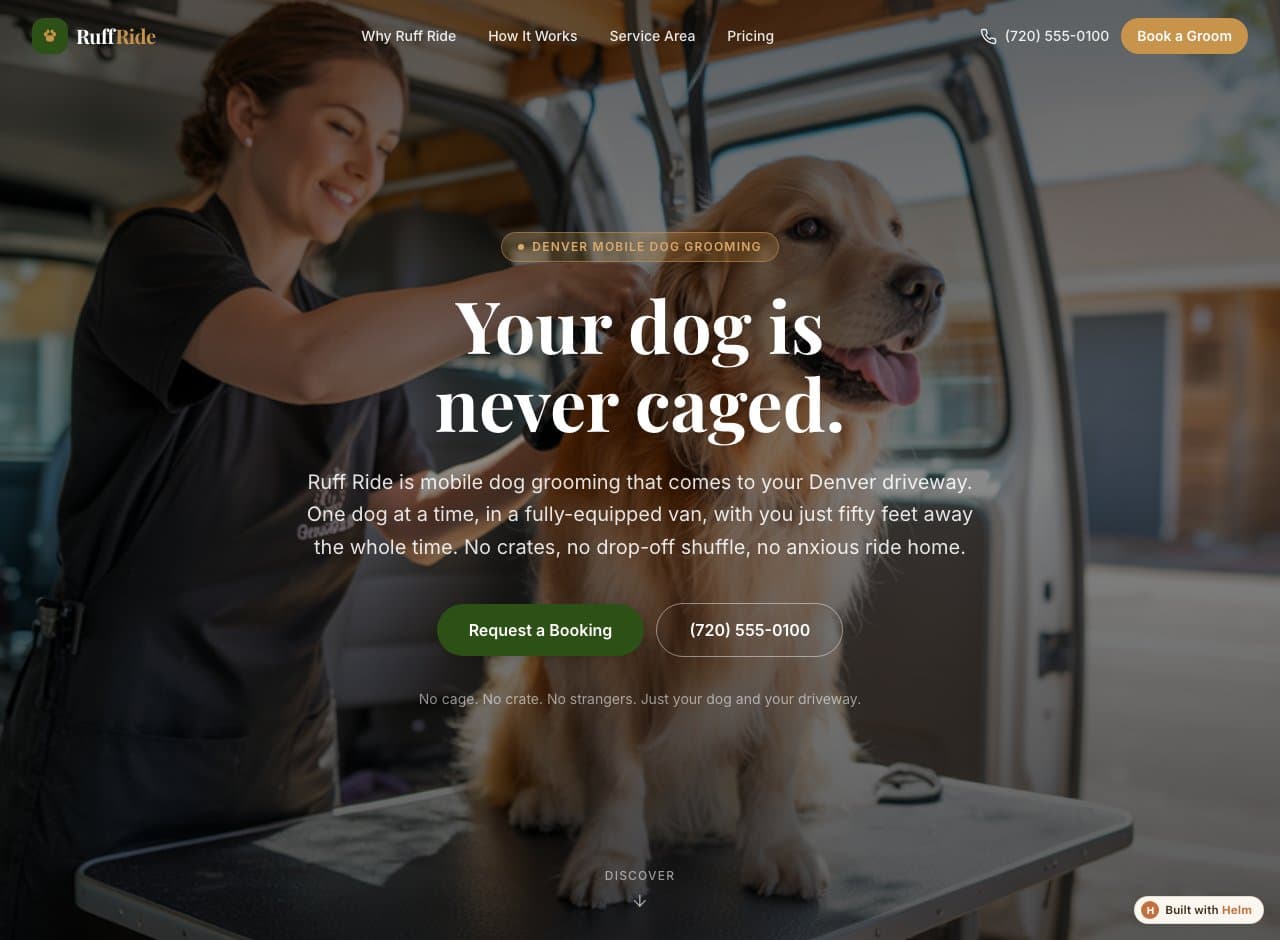
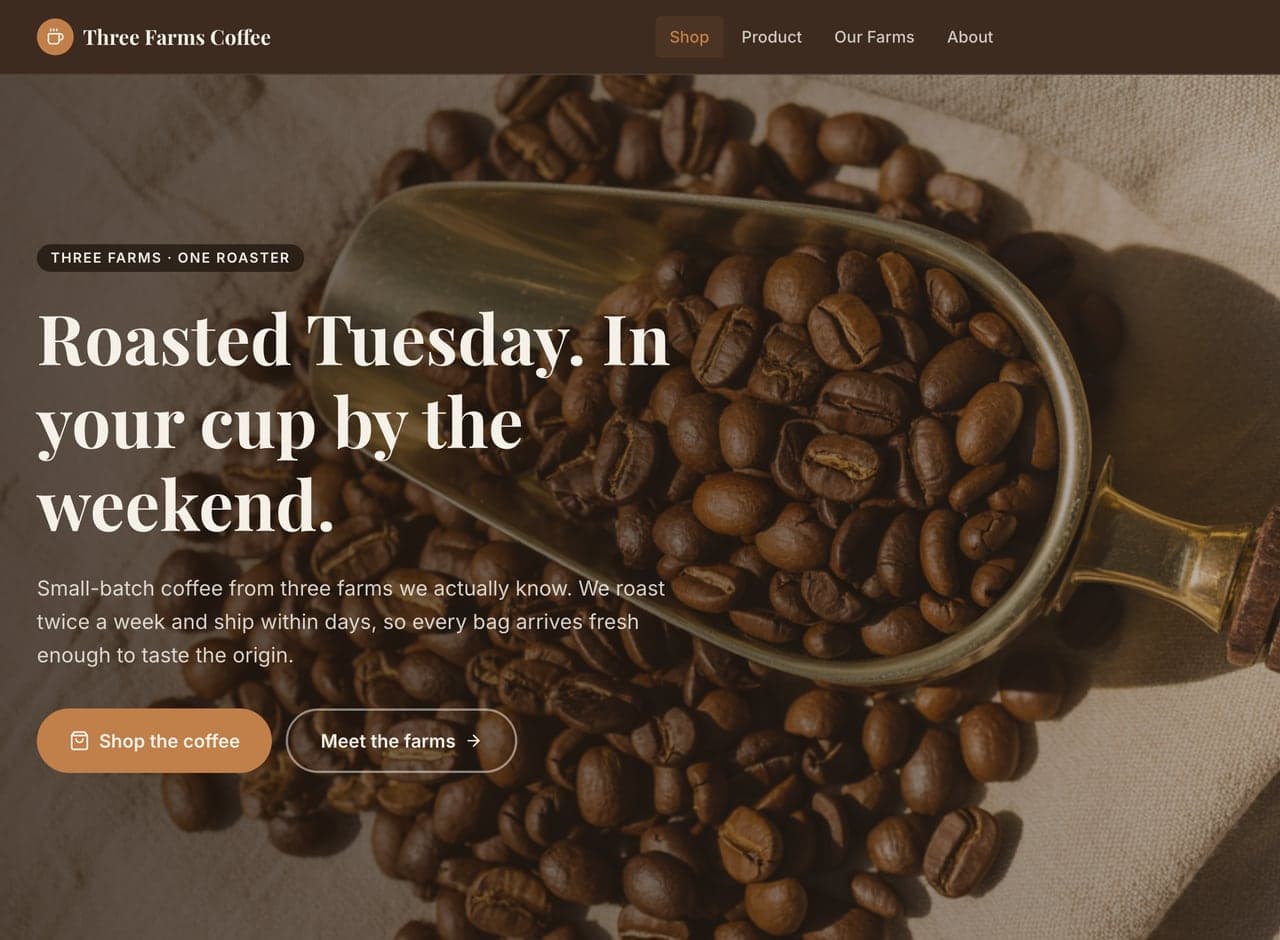
So we’re not going to show you one. These are three real, published Helm builds in other trades — same conversation, same builder. Two of them have a guide of their own if you want to see how the advice changed for a different business.
Common questions
Can people subscribe from the site?
Yes. Email signup capture is part of the build and connects when you go live, so the page can grow your list directly rather than bouncing people to another service to sign up.
Can I charge for a paid membership?
Yes. Stripe payments can be connected when you go live, including recurring billing, so a free reader can become a paying member without leaving your site.
Can I update the page as the newsletter grows?
Yes. Click into any copy and edit it, or describe the change and Helm makes it — useful for swapping in your latest issue or sharpening the promise as the newsletter finds its footing.
Tell Helm about your newsletter or paid community.
A few minutes of conversation, then a plan you read and approve before anything gets built.
Start a planFree to start — you see exactly what Helm produces for your newsletter or paid community before you decide anything.