A website for your print-on-demand shop
A print-on-demand shop lives or dies on two things a generic store page ignores: how tightly the designs speak to one particular audience, and how honestly it sets expectations about a product that's made only after it's been ordered.
What a print-on-demand shop’s website actually needs
Five things, in the order they matter. The first one is most of the job.
Be unmistakably for one particular person
Print-on-demand is a crowded shelf, and a store that tries to appeal to everyone appeals to no one. The shops that sell pick a specific audience — a hobby, a profession, an inside joke — and make every design and every word feel like it was made for exactly that person and nobody else.
Show the design on the actual product
A flat image of the artwork isn't what someone's buying — they're buying it on a shirt, a mug, a poster on their wall. Showing the design on the real item, worn or used, lets a buyer picture owning it, which a design floating on a plain white square never quite manages.
Set print and shipping times honestly
Because each item is made to order, it takes longer to arrive than people expect from an online store, and a surprise on that front becomes a complaint and a refund. Saying up front that items are printed just for them, and how long that takes, turns a delay into a feature rather than a grievance.
Own the storefront instead of renting an audience
Selling only through someone else's platform means the audience is theirs, not yours, and the rules can change overnight. A store of your own — your name, your checkout, your customer list — is the asset that survives when a platform shifts its fees or its reach underneath you.
Make a small range feel like a real shop
A handful of designs can look thin, or it can look curated, and the difference is presentation. Grouping the range, leading with your strongest piece, and writing like a shop with a point of view makes a lean catalog read as deliberate rather than half-finished.
None of that is a to-do list for you.
Four of your team are working today. Each one owns a stage, and each stage happens for your print-on-demand shop specifically — not for a category you picked off a menu.

Atlas
Asks what your print-on-demand shop actually does — what you specialise in, who calls you, and what you want more of.

Orion
Turns that into a plan you read before anything is built — including which of the five above your page leads with.

Forge
Builds the whole site: the pages, the words, the imagery and the way people get in touch. You can watch or close the tab.

Compass
Puts it live on your own domain, and wires up booking and payments when you’re ready to take money through it.


Echo markets and Ledger counts. Neither has shipped, so neither is on your team yet — we would rather show you the empty chairs.
We haven’t built a print-on-demand shop yet.
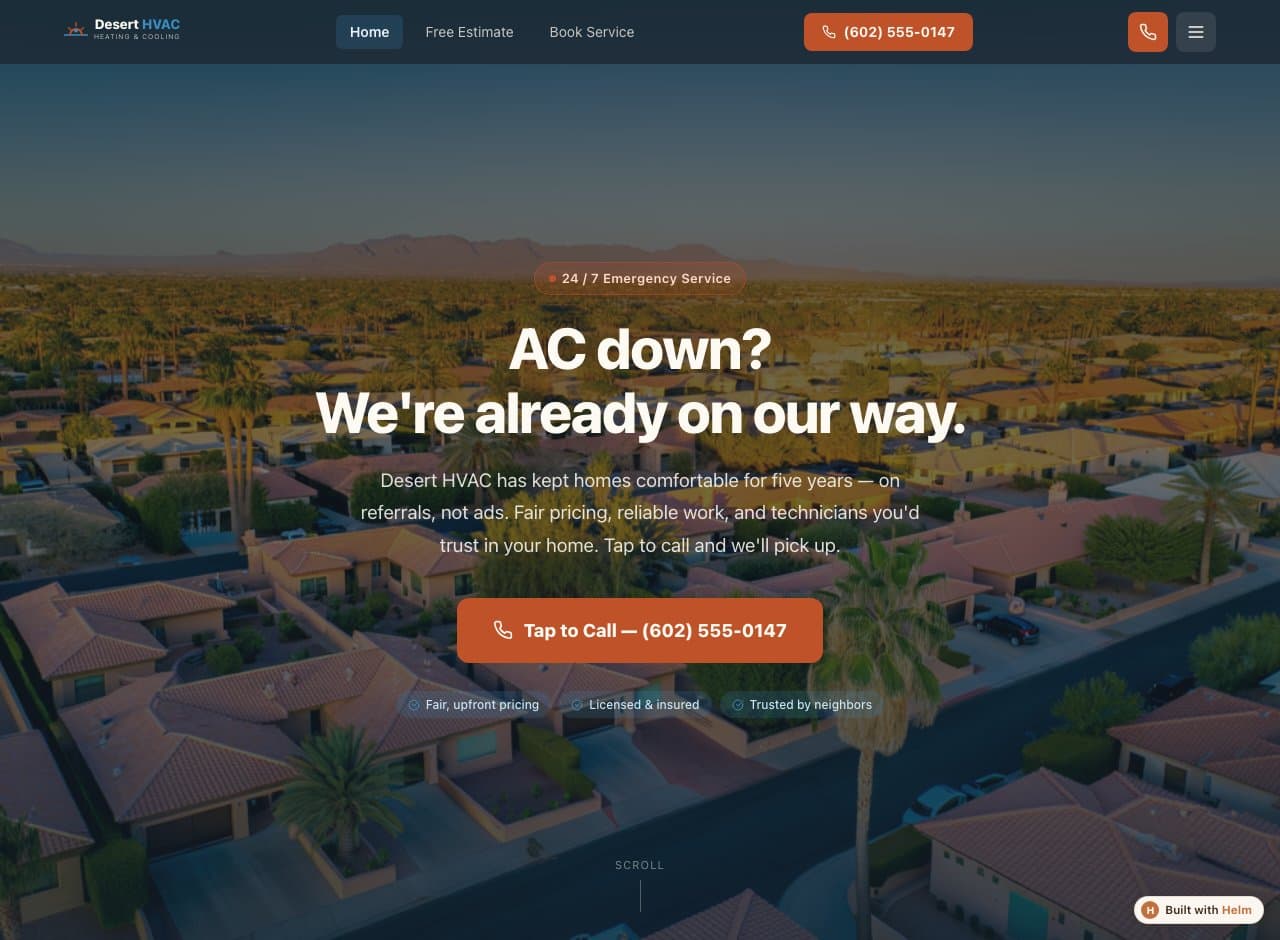
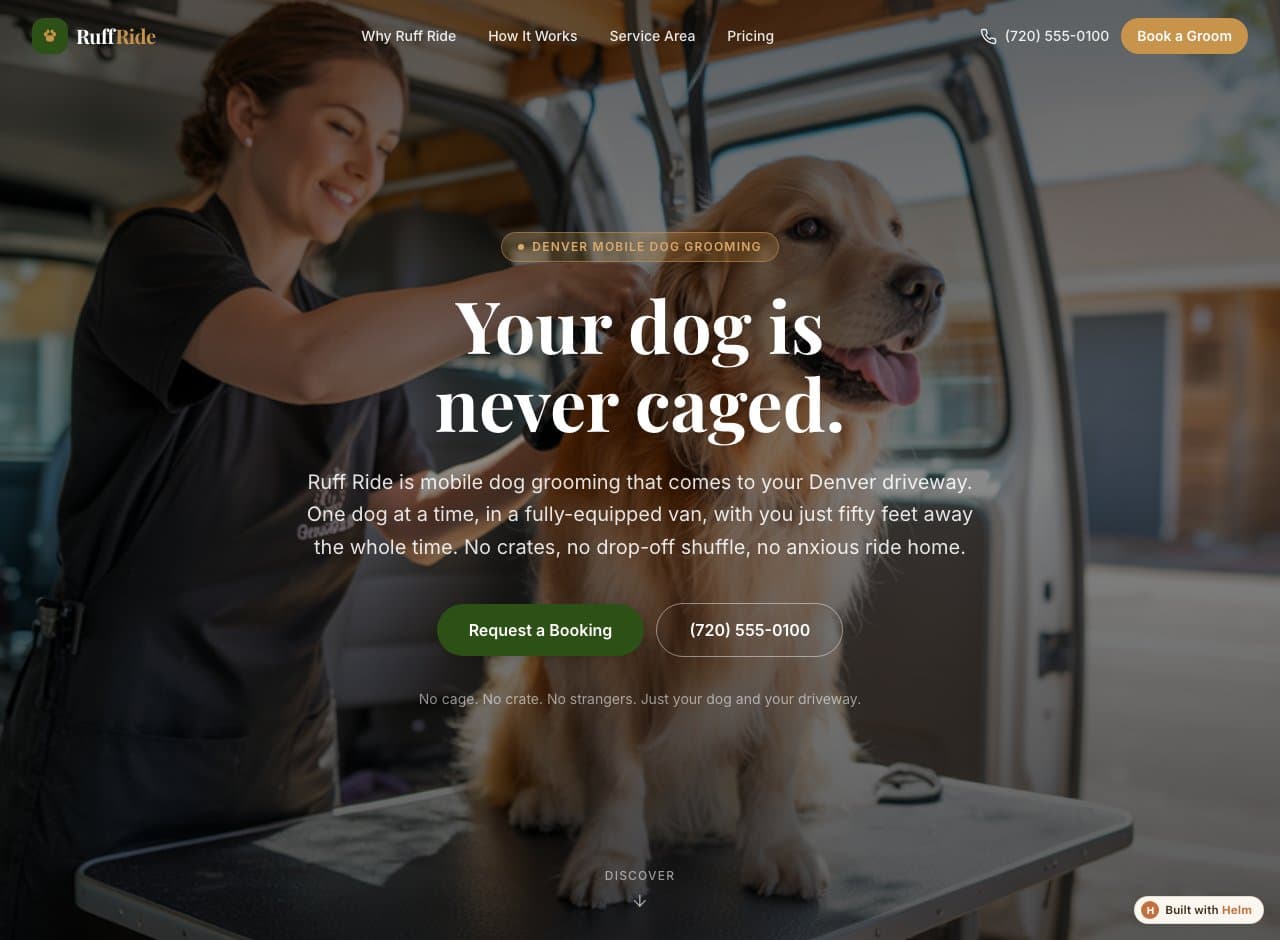
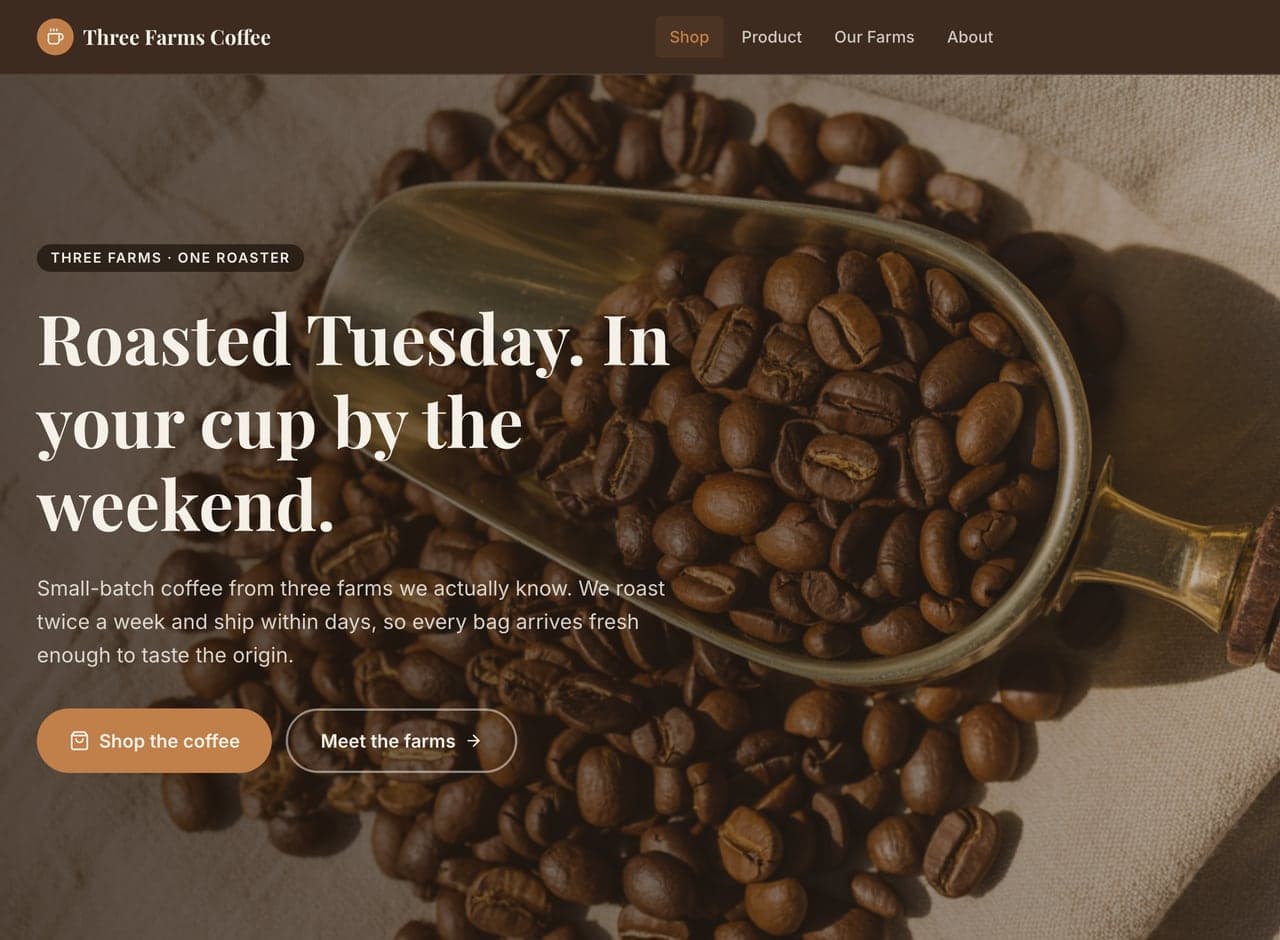
So we’re not going to show you one. These are three real, published Helm builds in other trades — same conversation, same builder. Two of them have a guide of their own if you want to see how the advice changed for a different business.
Common questions
Can customers buy directly on my site?
Yes. Stripe payments are part of what Helm connects when you go live, so people check out on your own store rather than on a platform that keeps the customer relationship for itself.
Can I use my own design mockups?
Yes, and you should — your designs on the real product are the whole pitch. Helm builds the layout and you add your own images once the site is live.
Can I add new designs myself?
Yes. Click into the page and edit it, or describe what you're adding and Helm makes the change. A print-on-demand range grows constantly, so it's built to be something you maintain yourself.
Tell Helm about your print-on-demand shop.
A few minutes of conversation, then a plan you read and approve before anything gets built.
Start a planFree to start — you see exactly what Helm produces for your print-on-demand shop before you decide anything.